
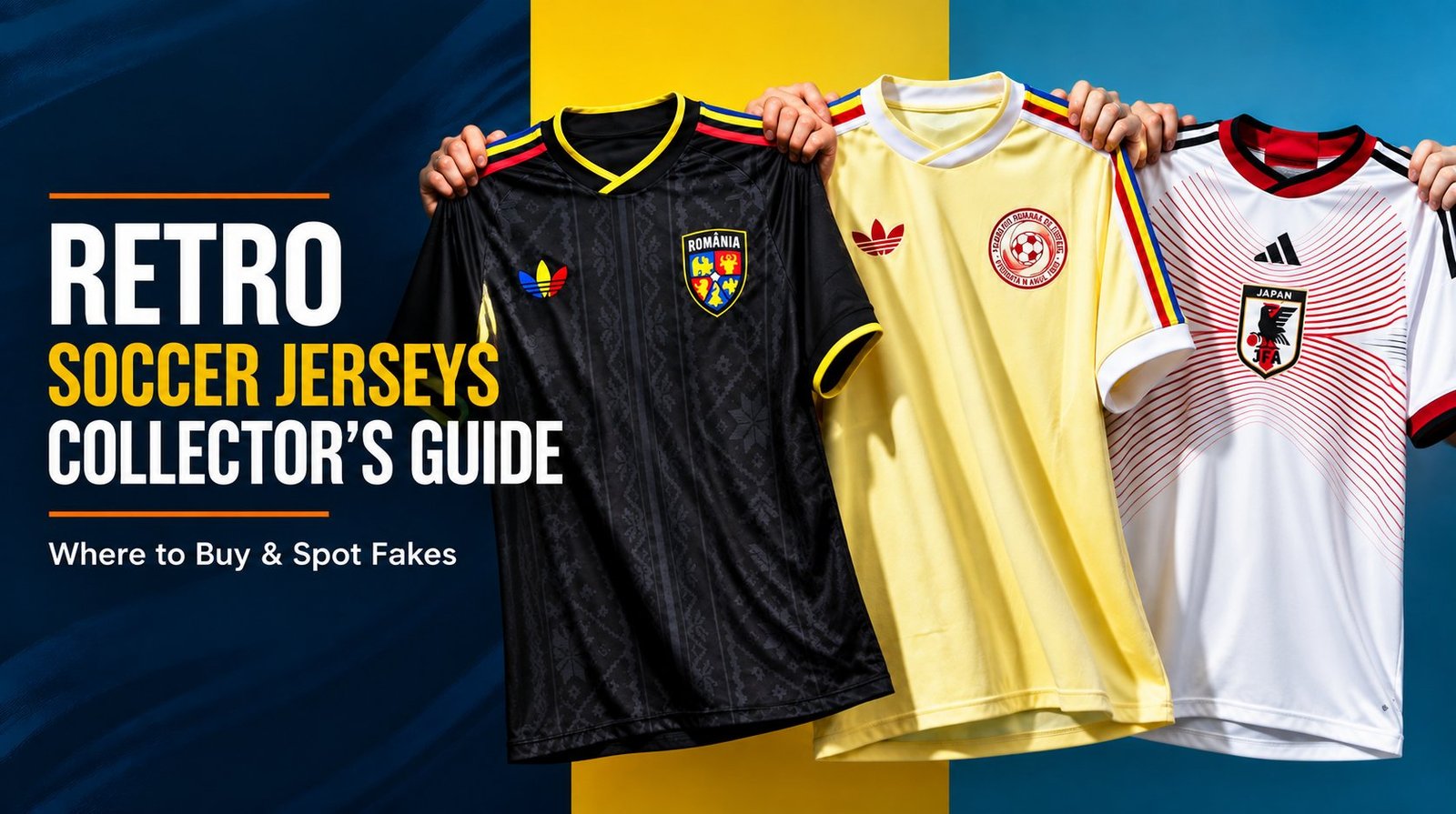
"Retro" and "vintage" get used interchangeably in soccer jersey listings, but they mean different things, and that difference decides what you’re paying for. This guide walks through how to tell a real vintage jersey from a reproduction, what makes one valuable, and where the fakes usually slip through.
Table of Contents
- Vintage, retro, and reproduction aren’t the same thing
- The tells that separate a real vintage jersey from a fake
- What drives a vintage jersey’s price
- Where real vintage pieces usually turn up
- Caring for a vintage jersey once you own one
- Building a comparison: original, reissue, and reproduction
- If you want the look without collector pricing
Vintage, retro, and reproduction aren’t the same thing
A vintage jersey is an original piece. A brand made and sold it during the era it represents, so a 1994 shirt bought and worn in 1994 counts as vintage. A brand that makes a new shirt today using that same 1994 design has made a retro reissue or a reproduction, not vintage, no matter how accurate the design looks.
Officially licensed retro reissues exist too. A club or brand sometimes rereleases a classic design decades later, with current manufacturing and current tags. These aren’t fakes. They’re just not the original garment, and a serious collector prices the two far apart.
Then there’s the unlicensed reproduction, a jersey copying a classic design without a license from the club or brand behind it. Some sellers are honest about what they’re offering. Others pass it off as the real vintage piece, and that’s where most of the fake-spotting advice below applies.
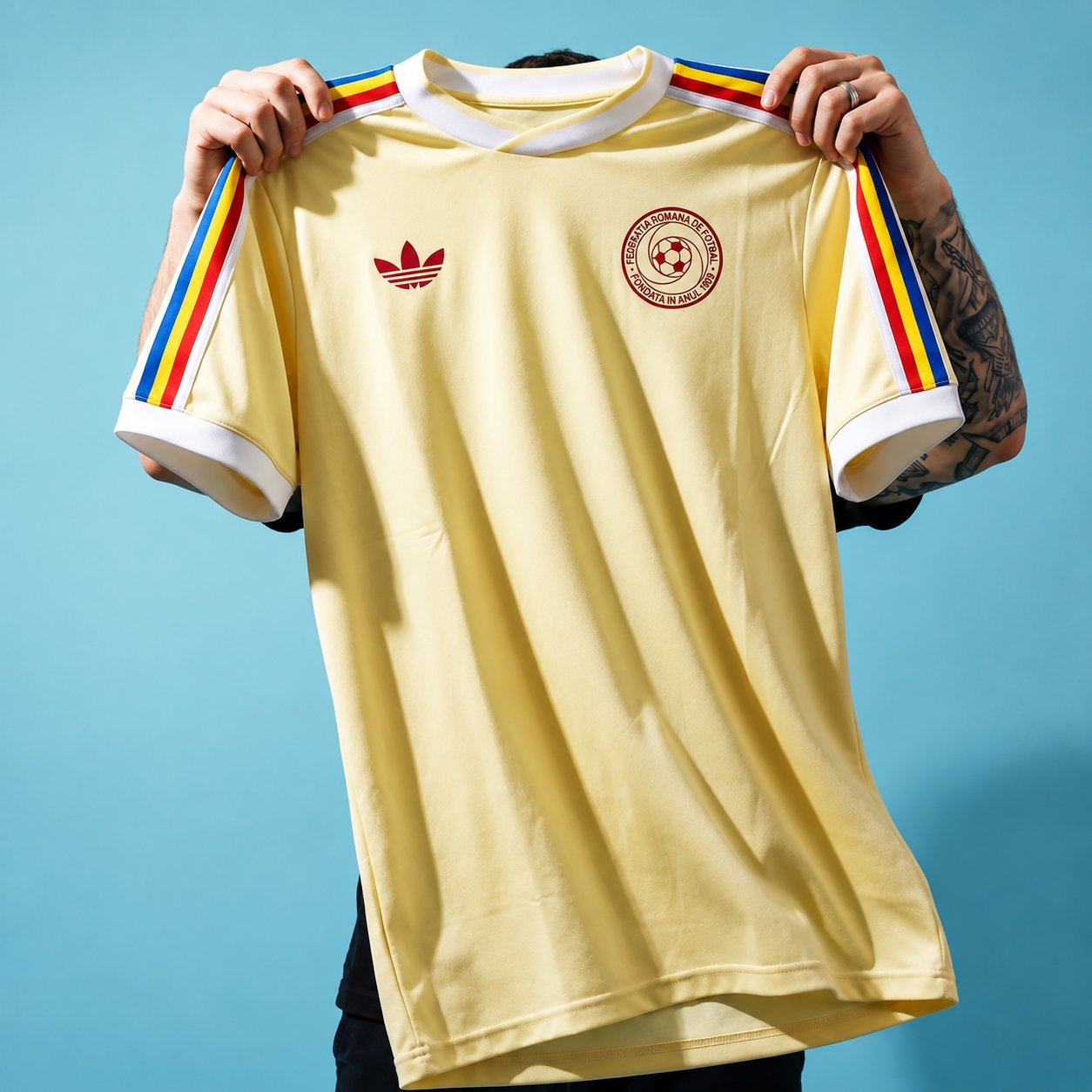
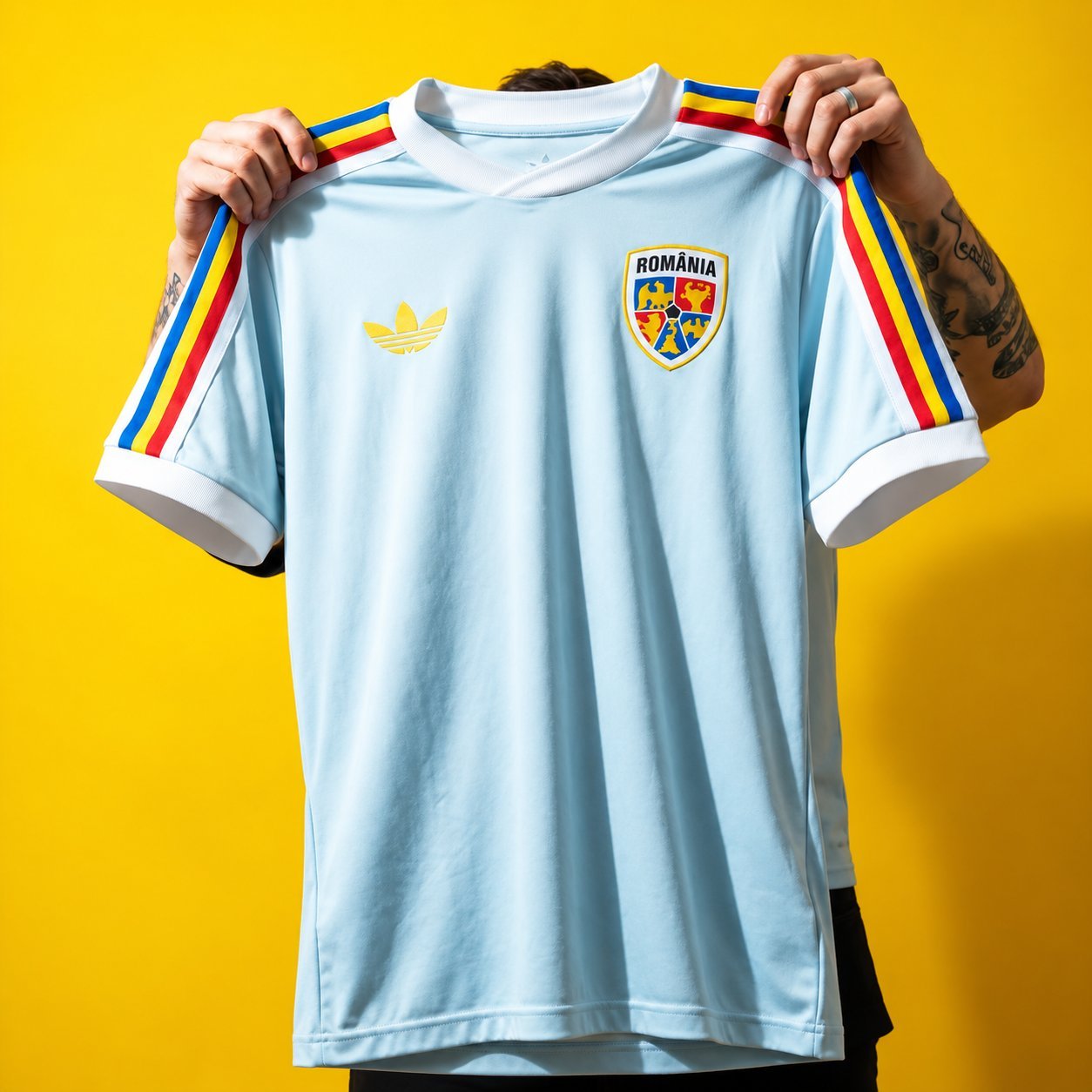
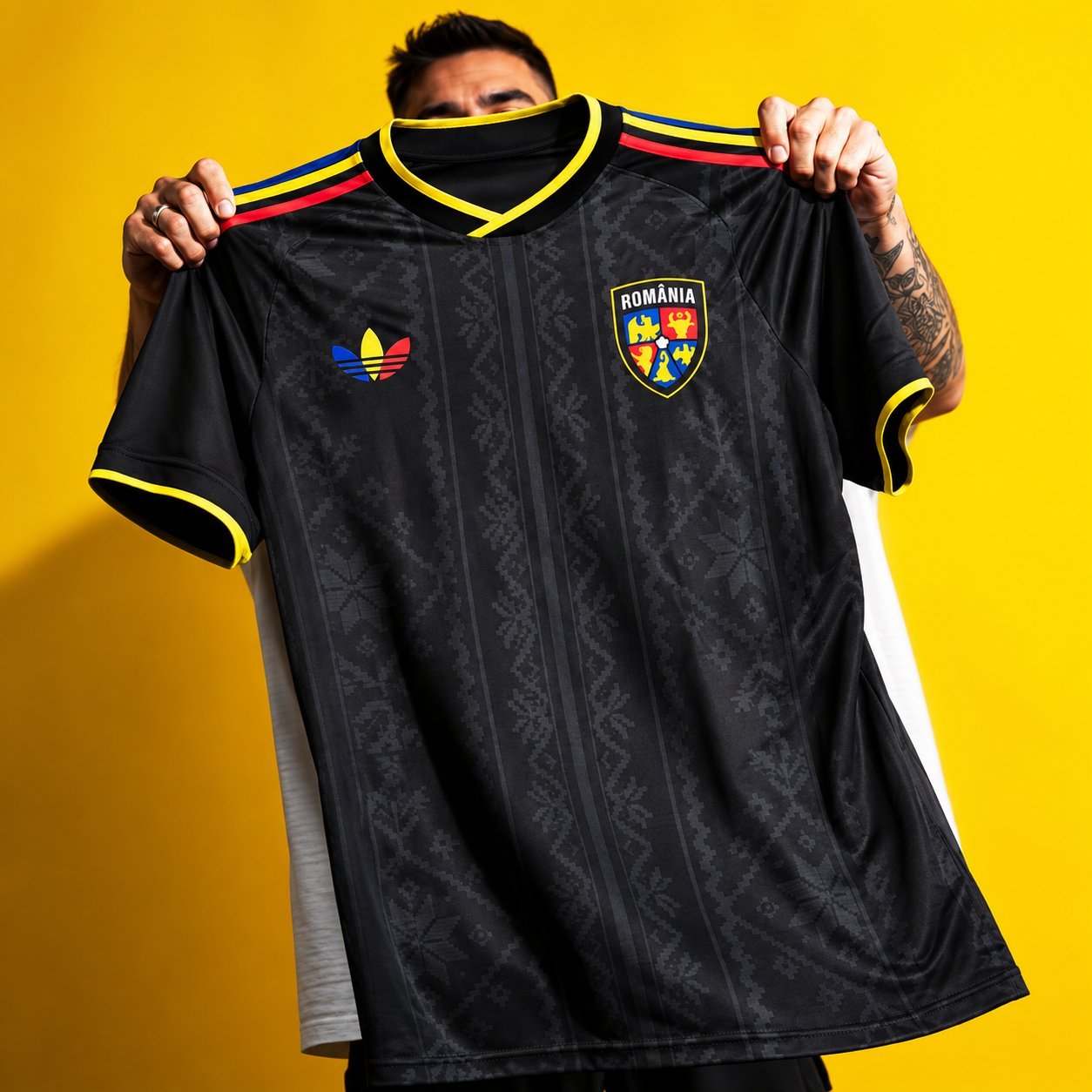
Quick note before the fake-spotting checklist: if you’re not chasing an original piece and just want the retro look for less, FANKIT stocks hundreds of retro-styled reproduction jerseys, covering multiple clubs and specific historic seasons, typically around $26.50 with your own name and number added for $5 more. That’s a reproduction, not an original or a confirmed licensed reissue, and it’s a different purchase than anything covered below. Worth knowing upfront if you’re here for the look rather than the collectible.
The tells that separate a real vintage jersey from a fake
Check the wash label first. A missing label isn’t automatically a red flag, since some legitimate player-issue jerseys skip it, but pen marks or handwriting on a label usually mean someone altered it, and that’s a real warning sign.
Look for a manufacturer product code, typically near the collar or along the hem. Genuine jerseys carry a code you can search and cross-reference against known authentic examples. If the code doesn’t match anything, or doesn’t exist at all, treat that as a serious flag.
Stitching tells its own story. A jersey that went through real manufacturer quality control won’t have loose threads, crooked seams, or a crest stitched on at a visible angle. Sloppy stitching on a supposedly rare 90s shirt is one of the most common giveaways.
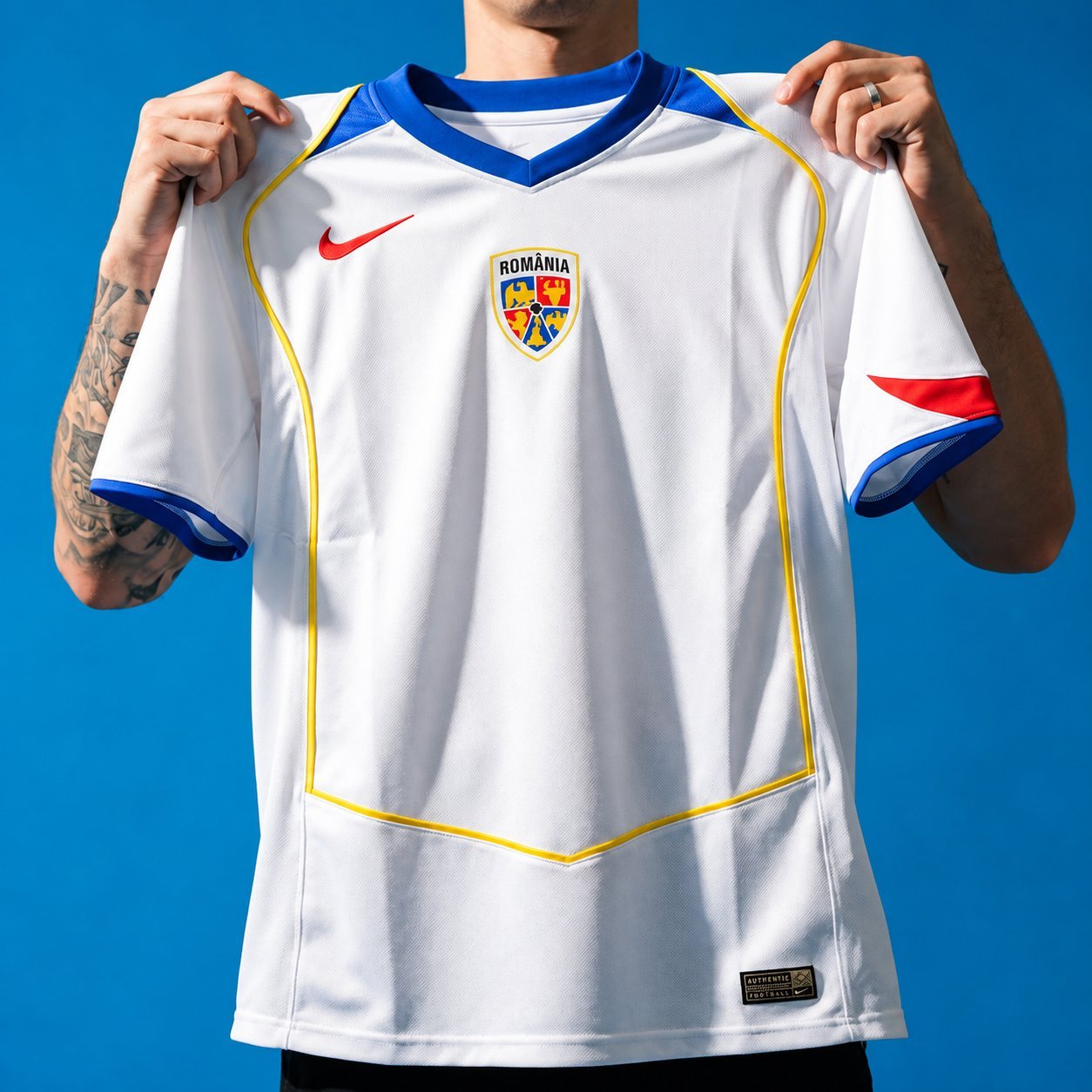
Check the crest and sponsor logo against verified photos of the real thing. Even a good reproduction copies size, color, and material texture imperfectly. A badge that’s slightly the wrong shade or a sponsor name in the wrong font is often the fastest tell once you know what to look for.
Price is a signal too, and it cuts the opposite way from how most buyers assume. A genuinely rare 1980s or 1990s jersey doesn’t show up in five sizes and multiple identical listings at a bargain price. If a “rare vintage” shirt is priced low and widely available, that availability itself is the red flag, not reassurance that it’s a fair deal.
What drives a vintage jersey’s price
Condition matters more than almost anything else. A deadstock jersey, meaning one that’s never been worn, still has its original tags attached, and hasn’t faded or cracked, sits at the top of the market. A worn, faded match-used shirt is still collectible, but it’s a different category of value entirely.
Player-issue jerseys, the actual cut and specification worn by a professional on the pitch, command more than a fan replica of the same design, since fewer of them exist and they’re made to a different standard.
Era matters. The 1990s get treated as the sport’s boldest design period, full of geometric patterns and experimental colorways, and World Cup jerseys from 1994 through 1998 sit near the top of most collectors’ want lists. The 2000s, with superstar-driven kits from that era’s biggest names, hold steady demand too. Jerseys from the 2010s are only now starting to enter vintage territory, which makes them the more affordable entry point if you’re starting a collection.
Where real vintage pieces usually turn up
Specialist vintage retailers are usually the safer starting point over a general marketplace, since they curate and quality-check what they sell rather than just listing whatever comes in. Memorabilia fairs and dedicated collector marketplaces are the other common route, where you can often handle a shirt in person before buying.
General resale marketplaces carry real finds too, but the fake-spotting steps above matter more there, since listings aren’t vetted by anyone before they go live.
Caring for a vintage jersey once you own one
Store it away from direct sunlight, since UV exposure fades colors faster than almost anything else. A cool, dry space matters more than most people expect. Humidity is what causes fabric to break down and graphics to crack over time.
Use acid-free tissue paper if you’re folding a jersey for storage, or a padded hanger if you’re hanging it. Both protect the fabric better than a standard wire hanger, which can stretch the shoulders out of shape over months of storage.
If you’re framing a jersey for display, use UV-protective glass or acrylic. Regular glass does nothing to slow down sun damage, and a framed jersey usually stays on display for years.
Wash sparingly, and only in cold water when you do. Heat is what breaks down printed graphics and crests, the same risk that applies to a brand-new personalized jersey as much as a decades-old one.
Building a comparison: original, reissue, and reproduction
| Type | What it is | Price expectation |
|---|---|---|
| Original vintage | A brand made and sold it during the era it represents, worn or deadstock | Highest for rare, high-condition, or player-issue pieces |
| Officially licensed retro reissue | Current manufacturing of a classic design, sold with the club or brand’s license | Mid-range, priced as new merchandise rather than collectible |
| Unlicensed reproduction | Copies a classic design without a license from the club or brand | Should be the lowest of the three, and sold honestly as a reproduction, not as vintage |
If you want the look without collector pricing
FANKIT isn’t a vintage or collector’s marketplace, as the note above already flagged, but retro is a real part of its catalog rather than a one-off item. Searching its retro listings turns up hundreds of results, from a specific Chelsea home shirt spanning three different seasons to a Borussia Dortmund away design from the 1996–97 campaign, each sold as a current reproduction rather than an original or a confirmed licensed release.
Pricing runs around $26.50 for a standard reproduction, with sizes from S through 2XL and your own name and number added for $5. FANKIT’s full customization process also covers basketball, rugby and training wear, and kids’ team sets, in case a retro soccer look isn’t the only thing you’re ordering.
Either way, know which category you’re buying into. A collector wants an original or a licensed reissue. A fan wants a good-looking, personalized reproduction at a fair price. Both are legitimate goals, but they’re not the same purchase, and treating them as interchangeable is how buyers end up disappointed either way.
FAQ
What’s the difference between a retro jersey and a vintage jersey?
Vintage means the jersey was made and sold during the era it represents. Retro usually means a modern reproduction or reissue of that same historic design, made with current manufacturing.
Is a replica jersey the same as a fake?
No. A replica is typically sold openly as a fan-version copy of a current design. A fake is a reproduction sold deceptively as if it’s the genuine original or officially licensed piece.
What does “deadstock” mean for a vintage jersey?
It means the jersey has never been worn and still has its original tags attached. Deadstock condition sits at the top of the vintage market’s value scale.
Why don’t some genuine vintage jerseys have a wash label?
Manufacturers sometimes left the wash label out of player-issue jerseys as part of the original spec. A missing label isn’t automatic proof of a fake, though it does mean you should check other details more carefully.
Are 1990s soccer jerseys worth more than other decades?
Generally, yes, since the 90s are widely considered the sport’s most experimental design era, and World Cup kits from 1994 to 1998 are especially sought after. Value still depends heavily on condition and rarity within that era.
Can I get a vintage jersey professionally authenticated?
Specialist vintage retailers and some memorabilia services offer authentication for higher-value pieces. For an everyday purchase, checking labels, stitching, and product codes yourself covers most of what a buyer needs.
Should I wash a vintage jersey before storing it?
Wash sparingly and only in cold water if needed. Frequent washing, and any high heat, breaks down old graphics and fabric faster than normal wear does.
Does FANKIT sell vintage or officially licensed retro jerseys?
FANKIT makes retro-styled reproductions of classic club designs and sells them as fan apparel, not as original vintage pieces or a confirmed licensed release. If a collector-grade original is what you’re after, that’s a different product and a different price range.
What’s the fastest way to spot a fake crest or badge?
Compare it against verified photos of the real design. Size, color shade, and material texture are usually where a reproduction badge falls short, even when the overall shape looks close.
Is it safe to buy a rare vintage jersey from a general marketplace?
It can be, but the fake-spotting checks matter more there than on a specialist site, since general marketplace listings aren’t vetted before they go live. Verify the label, product code, and price against what a genuinely rare piece should look like before you buy.
Where to go from here
If you’re chasing an original piece, start with a specialist vintage retailer or a memorabilia fair rather than a general marketplace, and run every listing through the fake-spotting checks above before you pay. If what you actually want is a personalized, club-style reproduction at a fair price rather than a collector’s item, browse the retro jersey listings and add your name and number at checkout for $5. Ordering for a group instead? Reach out with your roster and design idea for a bulk quote.