
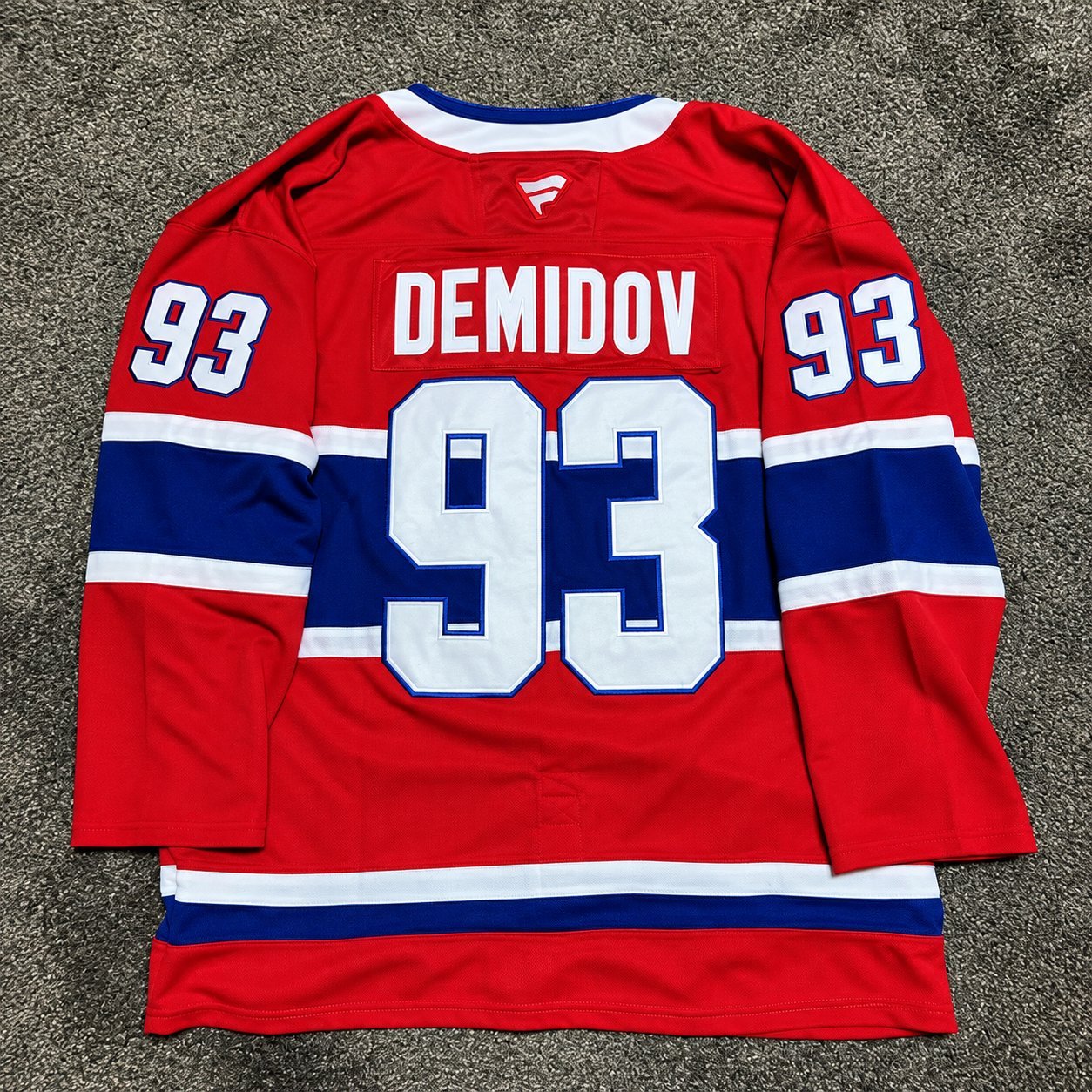
A hockey jersey in your usual size runs bigger than a basketball or soccer jersey in the same label, because it’s built to fit over shoulder and elbow pads, not just your body. If you’re buying to wear casually, your regular size works. If you’re buying to play in, size for your equipment, not your t-shirt.
This guide breaks down the real NHL jersey size chart, explains why hockey sizing confuses so many first-time buyers, and covers youth sizing too.
Table of contents
- How hockey jerseys are measured
- NHL jersey size chart
- Why hockey jerseys are cut so much bigger
- Sizing advice depends on how you’ll wear it
- Youth and junior hockey jersey sizes
- Goalie jerseys run even bigger
- Game jersey or practice jersey changes the fit too
- If you’re ordering a custom jersey instead
- FAQ
- Where to go from here
How hockey jerseys are measured

Here’s the part that trips people up before they even look at a size chart: most hockey jersey measurements are flat, not around-the-body. A size 46 chest listed at 21.5 inches means the jersey measures 21.5 inches across when laid flat with the front fully closed, side seam to side seam, not a 21.5-inch circumference.
To compare your own body to that number, fold your tape measure’s circumference reading in half, or lay a jersey you already own flat and measure it the same way before shopping for a new one. Comparing your full chest circumference directly to a flat jersey measurement will make every size look too small.
NHL jersey size chart (current Fanatics and prior Adidas sizing)
Fanatics became the NHL’s official on-ice jersey supplier starting with the 2024-25 season, replacing Adidas, which had run the league’s uniforms since 2017. The jerseys are still made by the same Quebec manufacturer, SP Apparel, and sizing has carried over largely unchanged, which is why “Adidas hockey jersey size chart” searches still turn up current, accurate numbers.
| Euro size | U.S. size | Chest, flat (in.) |
|---|---|---|
| 42 | XX-Small | 19.5 |
| 44 | X-Small | 20.5 |
| 46 | Small | 21.5 |
| 50 | Medium | 22.5 |
| 52 | Large | 23.5 |
| 54 | X-Large | 24.5 |
| 56 | 2X-Large | 25.5 |
| 60 | 3X-Large | 27.5 |
For reference, Fanatics’ Authentic Pro jerseys run from size 48 (23.25 in. flat chest) up through 58+/60 (29.25 in. flat chest), in two-inch steps between sizes. If a listing doesn’t specify which line you’re buying, the price usually gives it away, since Authentic Pro sits well above the standard Premium jersey.
Why hockey jerseys are cut so much bigger
Hockey is built around equipment first, and the jersey is sized to go over it, not instead of it.
Shoulder pads add real bulk across the chest, shoulders, and upper back, so the jersey needs enough room to sit over them without pulling tight across your shoulders when you reach for the puck. Elbow pads do the same thing to the sleeves, which is why hockey jersey sleeves run wider and longer than a regular shirt’s.
Most players also wear a compression shirt or base layer underneath everything else, and cold-rink players sometimes add another warm layer on top of that. All of it adds up to a jersey that needs more room than its size label would suggest on any other sport’s jersey.
Sizing advice depends on how you’ll wear it
If you’re a player suiting up with full equipment, size for the pads, not your bare chest. A jersey that fits perfectly over a t-shirt will pull and ride up once you’ve got shoulder and elbow pads underneath it, and game jerseys generally need more room than a jersey you’d only ever wear as a fan.
If you’re a fan buying one to wear over a hoodie or a sweater, your regular jersey size usually works fine, since you’re layering lighter than full gear. If you want a cleaner, more fitted look without any layering at all, sizing down a notch from the chart is a reasonable call.
For a team order, decide this upfront rather than guessing per player. A roster that’s half players suiting up with pads and half fans wearing it casually needs two different sizing conversations, not one blanket size chart.
Youth and junior hockey jersey sizes
Youth hockey sizing splits into junior and youth tiers, and most charts measure chest width rather than age or height, which makes it harder to size from a child’s age alone.
| Size | Chest, flat (in.) |
|---|---|
| Youth Small/Medium | 20 |
| Youth Large/X-Large | 22 |
| Youth Goal Cut | 22.5 |
Because these charts skip age and height entirely, measuring your child’s own chest and comparing it against the flat measurement above, halved for a true comparison, works better than guessing from a typical clothing size. If your child plays in full gear, size up from that measurement the same way you would for an adult.
Goalie jerseys run even bigger
If you thought a regular player jersey ran roomy, a goalie cut goes further still. Goaltenders wear a chest protector that’s noticeably bulkier than a skater’s shoulder pads, plus a separate catch glove and blocker to move freely around, so goalie jerseys come cut wider through the body and shorter in the sleeve to clear that gear without snagging on it.
A “goal cut” size label, like the Youth Goal Cut listed above, isn’t the same pattern as the standard player jersey in that same size range. If a listing doesn’t specify goalie or player cut, ask before you buy, since the two won’t fit the same person the same way even at an identical labeled size.
Game jersey or practice jersey changes the fit too
Game jerseys are built to the player-cut specs above, fitted close enough over full gear to stay out of the way during play. Practice jerseys often run looser and lighter, since they’re designed for drills rather than a tight on-ice fit, and some practice styles skip the fight strap and reinforced seams that a true game jersey includes.

If you’re buying for a team and some players will wear the jersey in games while others only need it for practice, treat those as two separate sizing decisions rather than ordering one size across the board.
If you’re ordering a custom jersey instead
FANKIT doesn’t make hockey jerseys. Its custom order lineup covers soccer, basketball, rugby and training wear, and kids’ team sets, built around those sports’ own fit, not hockey’s pad-first sizing.
Worth knowing if you do order from FANKIT for one of those sports: its own size guide lists measurements in centimeters and kilograms, tied to bust, waist, and height, rather than the flat-chest-in-inches convention hockey jerseys use. The two systems aren’t interchangeable, so measure fresh for whichever one you’re buying rather than converting one chart into the other.
Reach out with your sport and measurements if you want a sizing check before placing a team order in soccer, basketball, rugby, or kids’ sizing.
FAQ
Why do hockey jerseys fit bigger than other sports jerseys?
They’re built to fit over shoulder and elbow pads, not just your body, so the cut runs roomier through the chest, shoulders, and sleeves than a basketball or soccer jersey in the same size.
Is a hockey jersey’s chest measurement the full circumference or a flat measurement?
Flat. Most hockey jersey charts measure the garment laid flat, side seam to side seam, not wrapped around your body. Divide your own chest circumference by two before comparing it to the chart, then add room for fit and equipment.
Who makes NHL jerseys now, Adidas or Fanatics?
Fanatics, starting with the 2024-25 season, under a 10-year deal that replaced Adidas’s uniform contract, which had run since 2017. The same Quebec manufacturer still produces them.
Should I size up or down for an NHL jersey?
Size up if you’ll wear full equipment underneath, or want extra room for layering. Size down if you want a cleaner, more fitted look and won’t be wearing pads.
What’s the difference between Fanatics Premium and Fanatics Authentic Pro jerseys?
Premium is the standard retail jersey, sized in the Euro 42-60 range. Authentic Pro is a higher-end, Canadian-made line using a different numeric scale starting at size 48, generally priced higher.
How do I size a youth hockey jersey if I only know my child’s age?
Measure their chest directly instead, since most youth charts list chest width rather than age or height. Halve that measurement to compare against the flat youth chart above.
Does FANKIT sell NHL or hockey jerseys?
No. FANKIT’s custom order flow covers soccer, basketball, rugby and training wear, and kids’ team sets. Hockey isn’t part of that lineup, and its own size guide uses centimeters and kilograms rather than hockey’s flat-chest-in-inches system.
Where to go from here
Measure flat, not around your body, before trusting any hockey jersey size chart, and size for your equipment if you’re playing in it. If a personalized jersey in soccer, basketball, rugby, or a kids’ team set is what brought you here instead, FANKIT’s own size guide uses a different measurement system, so measure fresh rather than converting one chart into the other.
Need custom teamwear instead?
FANKIT doesn’t make hockey jerseys, but its custom order lineup covers soccer, basketball, rugby, training wear and kids’ team sets. Send your sport, measurements and design idea for a real quote.