

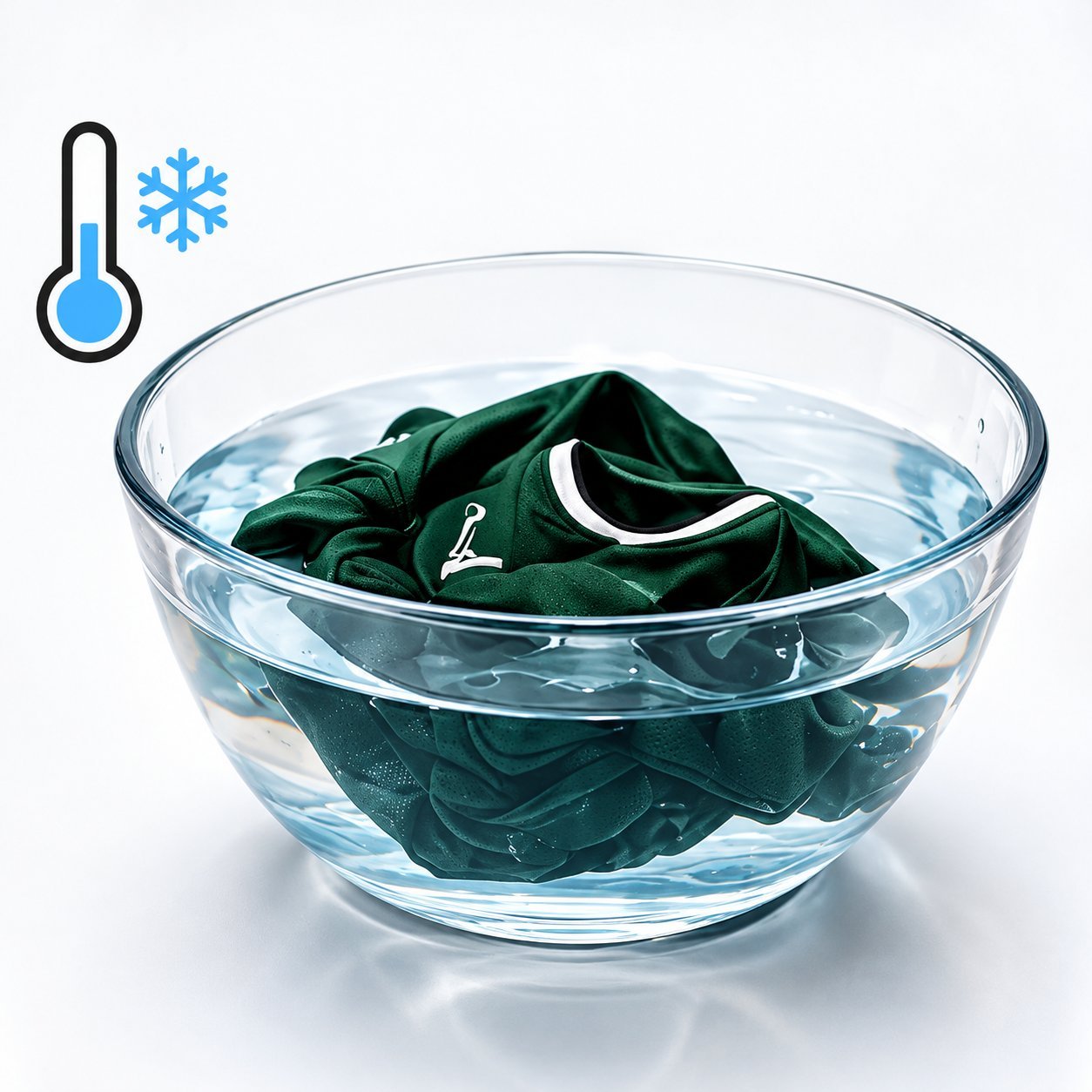
Wash your jersey in cold water, inside out, on a gentle or delicate cycle, then skip the dryer entirely. Heat is what destroys a jersey, not dirt. One trip through a hot dryer can crack printed numbers that survived a whole season of cold-water washes.
This guide walks through the full wash routine, how to treat the stains that show up most on a jersey, and why the printing method on your specific jersey changes how carefully you need to treat it.
In this guide
- Why heat is the real enemy, not dirt
- The wash routine, step by step
- Treating specific stains without damaging the print
- Why the printing method on your jersey changes the care routine
- How often to wash it, and how to store it between wears
- What never to do, no matter how dirty the jersey gets
- FAQ
- Where to go from here

Why heat is the real enemy, not dirt
Dirt comes out in a normal wash cycle. Heat is a different problem entirely, since it attacks the materials holding your jersey’s design onto the fabric rather than the fabric itself.
Printed, heat-pressed, and sublimated graphics sit on top of the base fabric using plastic-based inks or films. A hot dryer softens that layer every single cycle, and softened plastic cracks the next time you stretch the shirt putting it on. Do that enough times across a season and you’ll watch numbers flake off in sheets, long before the actual fabric wears out.
Embroidered and stitched details survive heat better, since thread doesn’t melt the way printed plastic does. Even so, high heat still shrinks synthetic jersey fabric around that stitching, which can pucker or loosen it over time. Cold water and air drying protect every construction method at once, so there’s no real reason to treat any jersey differently just because its lettering happens to be more heat-resistant than another’s.
The wash routine, step by step
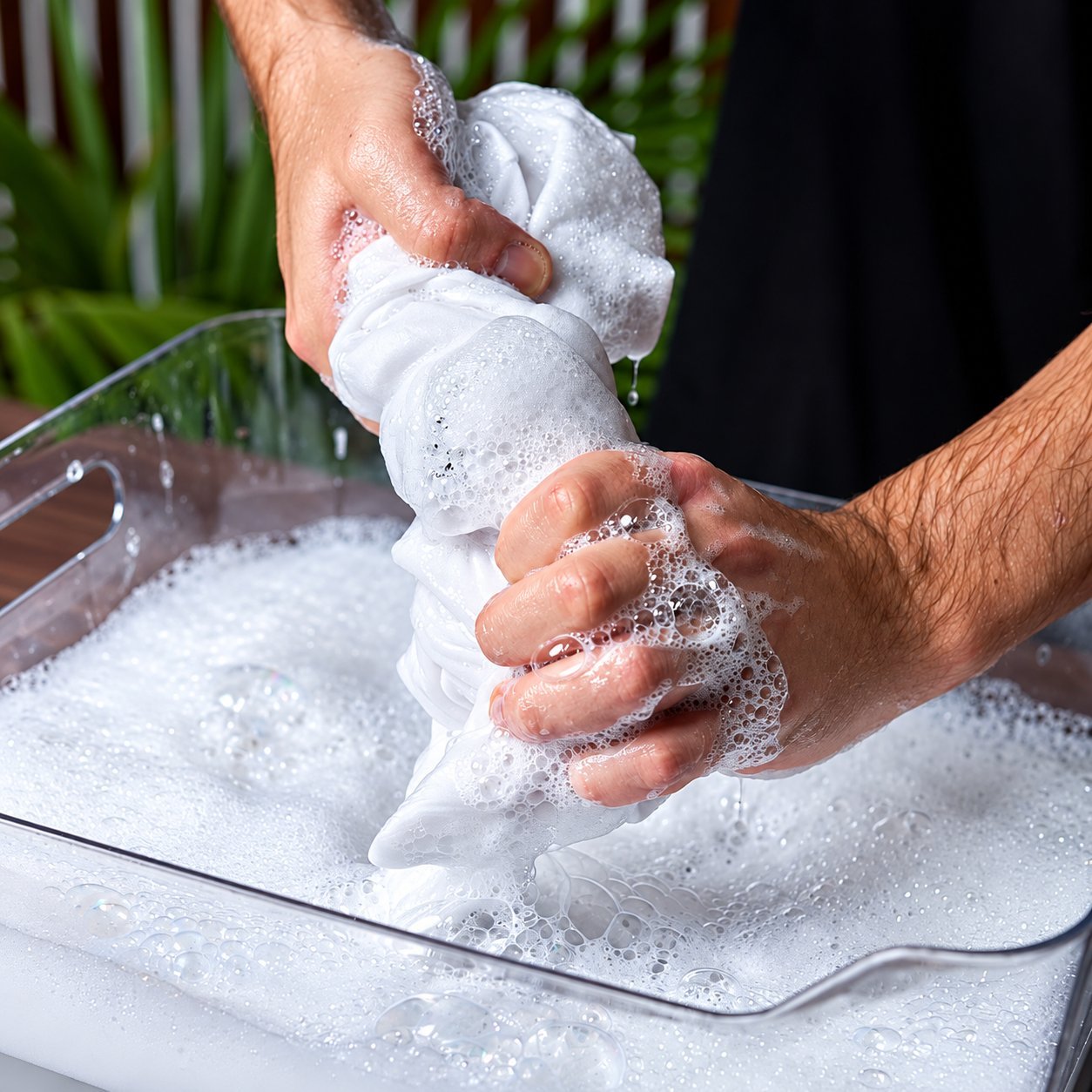
Turn the jersey inside out first. This does two things at once: it keeps numbers and patches from rubbing directly against the washing machine drum, and it lets the fabric’s inside face, where sweat and body oils settle in, get the most contact with detergent and water.
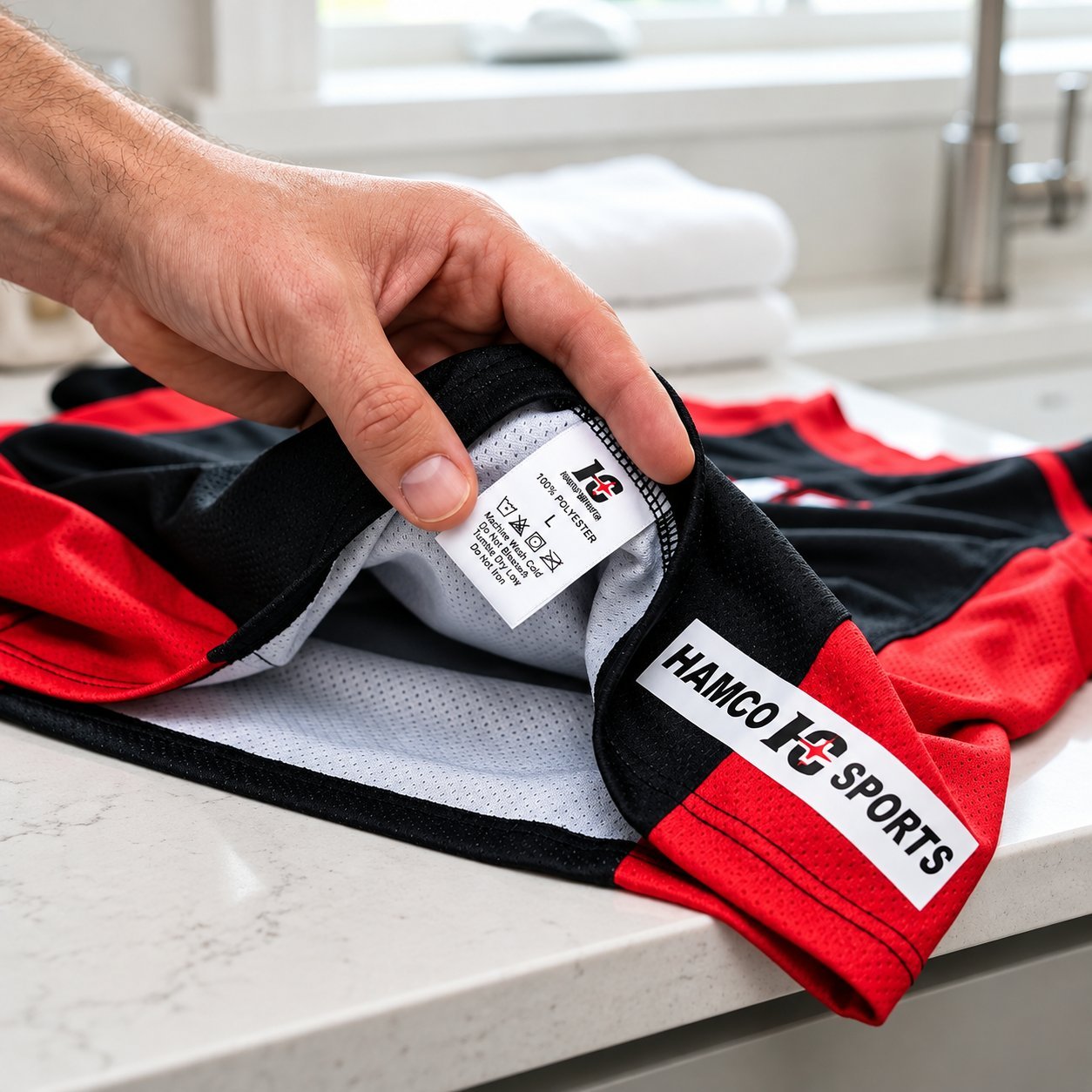
Wash on cold, on a gentle or delicate cycle. Nike’s own jersey care instructions call for exactly this combination, specifically because it limits fading, shrinking, and damage to the lettering. Skip anything labeled “normal” or “heavy duty” on your machine’s cycle dial.
Use a mild liquid detergent rather than a heavy-duty powder, and go light on the amount. Oversized jerseys and mesh fabrics don’t need a full scoop, and leftover detergent residue trapped in mesh weave is a common cause of lingering odor after the wash, not a sign you didn’t use enough.
Skip fabric softener completely. It coats synthetic fibers in a way that blocks moisture-wicking fabric from doing its job, and it can leave a filmy residue on printed graphics specifically.
Let the jersey air dry, laid flat or on a hanger, out of direct sun if the design includes bright or dark colors that can fade. This single step does more to extend a jersey’s life than any detergent choice you’ll make.


Treating specific stains without damaging the print
Grass, sweat, and blood each respond better to a different approach, and treating all three the same way is where most people go wrong.
For grass stains, mix equal parts water and white vinegar, with a splash more water for stubborn spots, and let it sit on the stain for 10 to 15 minutes before washing. A soft-bristle brush, never a stiff one, helps work it into the fibers without scuffing a printed graphic nearby.
For sweat stains and the odor that comes with them, an enzyme-based detergent made for activewear breaks down the proteins that cause both, where a standard detergent mostly just masks the smell. A quarter cup of white vinegar added to the wash cycle works as a cheap, effective backup if you don’t have one on hand.
For blood, cold water first, always, since hot water sets protein-based stains permanently into the fabric. Hydrogen peroxide lifts blood well, but don’t leave it sitting on a printed design for more than a few minutes, since it can fade ink the same way it lifts stains.
Whatever the stain, treat it before the jersey goes anywhere near a dryer. Heat sets a stain into fabric the same way it sets undissolved detergent, turning a treatable mark into a permanent one.
Why the printing method on your jersey changes the care routine
Not every number and logo on a jersey gets applied the same way, and FANKIT’s own custom order process is a good example of just how many methods exist: sublimation, digital printing, screen printing, heat transfer, embroidery, silicone or rubber printing, hot stamping, foam printing, flocked printing, diamond printing, and reflective printing, all available as options depending on the sport and design.
| Printing method | Where it sits | Care priority | Main risk |
|---|---|---|---|
| Sublimation | Dyed into the fibers | Cold water, skip hot dryer | Fades with hot washes and direct sun |
| Screen printing | Layer on fabric surface | Cold wash, inside out | Cracks under dryer heat |
| Heat transfer / digital print | Plastic film on surface | Cold wash, inside out | Peels with heat and friction |
| Embroidery | Stitched thread | Mesh laundry bag | Snags on zippers and rough surfaces |
| Silicone / rubber / foam print | Raised texture on surface | Gentlest cycle, air dry | Traps heat and friction in dryer |
| Hot stamping / flocked / diamond / reflective | Specialty layer on surface | Cold wash, air dry only | Coating degrades under heat |
Sublimated graphics are dyed directly into the fabric fibers rather than sitting on top of them, which makes them unusually resistant to cracking or peeling, though the color itself can still fade with repeated hot washes or direct sun exposure. Screen-printed and heat-transfer graphics sit as a layer on the fabric surface, which is exactly why they’re the most vulnerable to dryer heat and aggressive scrubbing. Embroidery holds up the longest physically, since it’s stitched thread rather than applied material, but it can snag on zippers or rough surfaces in the wash, so a mesh laundry bag is worth using if your jersey has raised embroidered patches.
Rubber, silicone, and foam printing add a raised, textured layer to the fabric, and that texture is exactly what traps heat and friction during a dryer cycle. These methods look great fresh out of the box but need the gentlest wash routine of the group.
If you’re not sure which method your jersey used, reach out to FANKIT directly with your order details, since the printing method chosen at checkout determines which care approach protects it best.
How often to wash it, and how to store it between wears
Washing after every single wear breaks down printed graphics faster than the dirt itself ever would. Unless the jersey is visibly stained or you’ve sweated straight through it, airing it out on a hanger for a few hours undoes most of the smell without putting it through another wash cycle.
A game-day jersey that only comes out a handful of times a season holds up fine on a standard hanger in a closet, as long as it’s fully dry first. Folding a damp jersey and storing it in a drawer traps moisture against the fabric, and that’s where mildew smell and faint discoloration usually start, not from the jersey itself being low quality.
If you’re storing a jersey long-term, somewhere between seasons or display pieces you’re not wearing often, keep it out of direct sunlight. UV exposure fades printed and sublimated colors steadily over months even without a single wash, which is a big part of why an old jersey left folded on a sunny shelf looks noticeably duller than one kept in a drawer or closet.
What never to do, no matter how dirty the jersey gets
Bleach breaks down the same inks and films that hold your numbers on, even the color-safe versions, so keep it away from any jersey with printed or heat-pressed graphics.
Ironing directly on a number or logo melts it on contact. If you genuinely need to press out wrinkles, iron the inside of the jersey only, or place a thin cloth between the iron and the printed area.
Wringing a wet jersey to speed up drying stretches the fabric unevenly and puts direct strain on stitched seams right where they’re weakest. A gentle squeeze between two towels gets the same water out without the damage.
FAQ
Can you put a jersey in the dryer on low heat?
It’s safer than high heat, but still risky for printed or heat-pressed graphics. Air drying flat or on a hanger avoids the issue entirely and takes only a few extra hours.
Does washing inside out make a real difference?
Yes. It reduces direct friction between the lettering and the machine drum or other clothes, and it lets detergent reach sweat and oil residue on the inside of the fabric more directly.
What detergent is safest for a jersey’s printed numbers?
A mild liquid detergent, used sparingly, protects printed graphics better than a heavy-duty powder detergent. An enzyme-based detergent made for activewear helps with odor without adding extra abrasive cleaning agents.
How do you get sweat smell out of a jersey for good?
Enzyme-based detergent breaks down the proteins causing the odor rather than just masking it. A quarter cup of white vinegar in the wash cycle works as a simple backup, and skipping fabric softener keeps the fabric’s own moisture-wicking properties intact.
Is sublimated printing more durable than screen printing for jerseys?
Generally yes, since the dye sits inside the fabric fibers rather than on top of them, so it resists cracking and peeling better. It can still fade with repeated hot washes or heavy sun exposure, so the same cold-water care routine still applies.
Should I wash a custom jersey differently than a retail one?
Not really, as long as you know which printing method was used. Match your wash routine to the most delicate element on the jersey, whether that’s a screen-printed number or an embroidered patch, rather than the jersey’s price or where it came from.
Where to go from here
Cold water, inside out, air dry. That single routine protects every printing method a jersey might use, from embroidery to sublimation, far better than any specialty product on its own. If you’re placing a custom order and want the most durable option for how you’ll wear it day to day, FANKIT’s team can walk you through which printing method holds up best for your specific design.
Need a custom jersey you can actually wash without worry?
FANKIT can walk you through which printing method holds up best for your specific design and how you’ll wear it day to day, so the care routine is built into the jersey, not something you figure out after the numbers start peeling.