This page is independent and isn’t affiliated with, endorsed by, or sponsored by the Mexican Football Federation, ABA Sport, adidas, mitre, Garcis, or any national federation or trademark holder referenced here. Brand and team names appear for identification only.
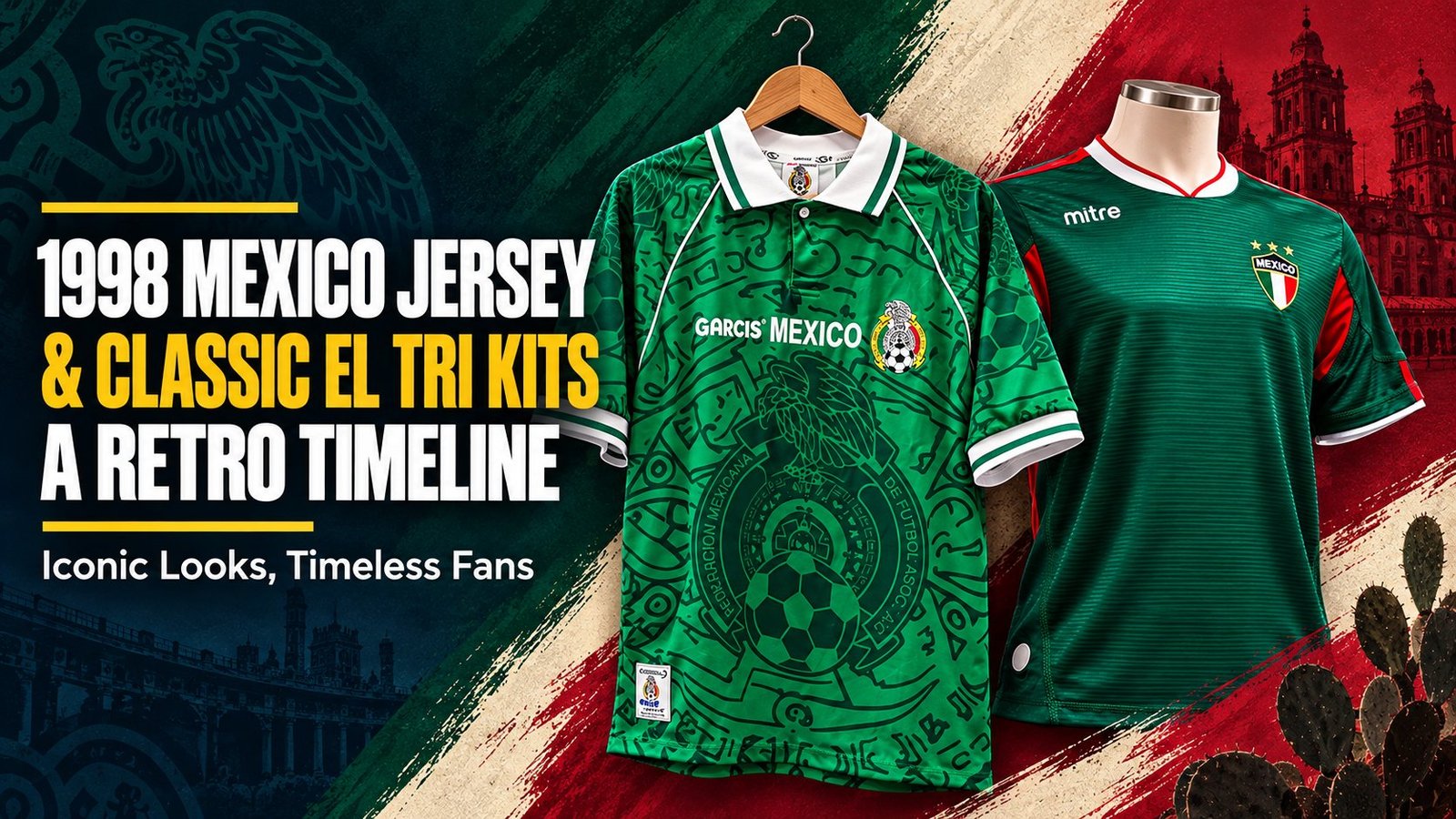
Ask a Mexico fan to name one jersey without hesitating, and most will say the same thing. The 1998 Mexico jersey, green with the Aztec Sun Stone spread across the chest, still shows up on "greatest kits ever" lists almost thirty years later, and adidas's 2026 home kit for Mexico's own World Cup echoes that same design.
Three different things get sold under "1998 Mexico jersey" or "Mexico retro jersey," and they're not interchangeable: an original piece actually worn during the 1998 tournament, ABA Sport's own licensed reissue of that design, and an unlicensed reproduction copying the look without any connection to the brand that made it. This timeline walks through how Mexico's kits evolved into the tricolor identity fans now call El Tri, why the 1998 design still gets copied often, and how to tell which of the three you're actually looking at.
Table of contents
- Why the 1998 jersey still gets talked about
- The full timeline, from plain green to full tricolor
- 2026: the pattern comes home
- Reissue, reproduction, or original: know which one you're buying
- What a genuine 90s-era Mexico jersey feels like in hand
- The timeline at a glance
- Comparing your three real options
- Where FANKIT fits into a Mexico retro search
Why the 1998 jersey still gets talked about
A small Mexican manufacturer built this shirt, not one of the sport's usual giants. ABA Sport, a Monterrey-based company co-founded by Alejandro Burillo and Jorge Lankenau, won the bid to dress the national team ahead of France 1998, reportedly beating out larger international brands for the contract, according to Mexican sports press coverage of the jersey's history.
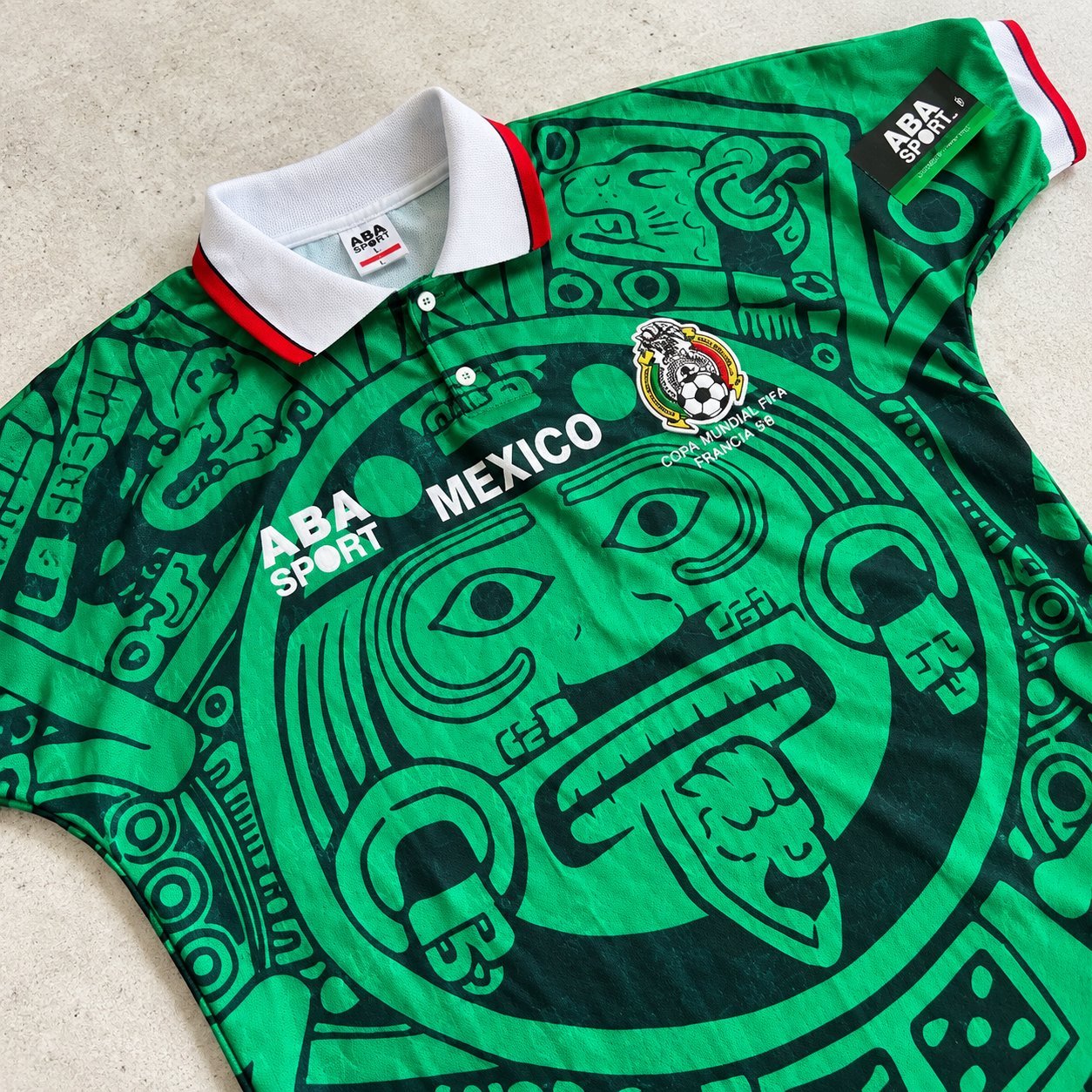
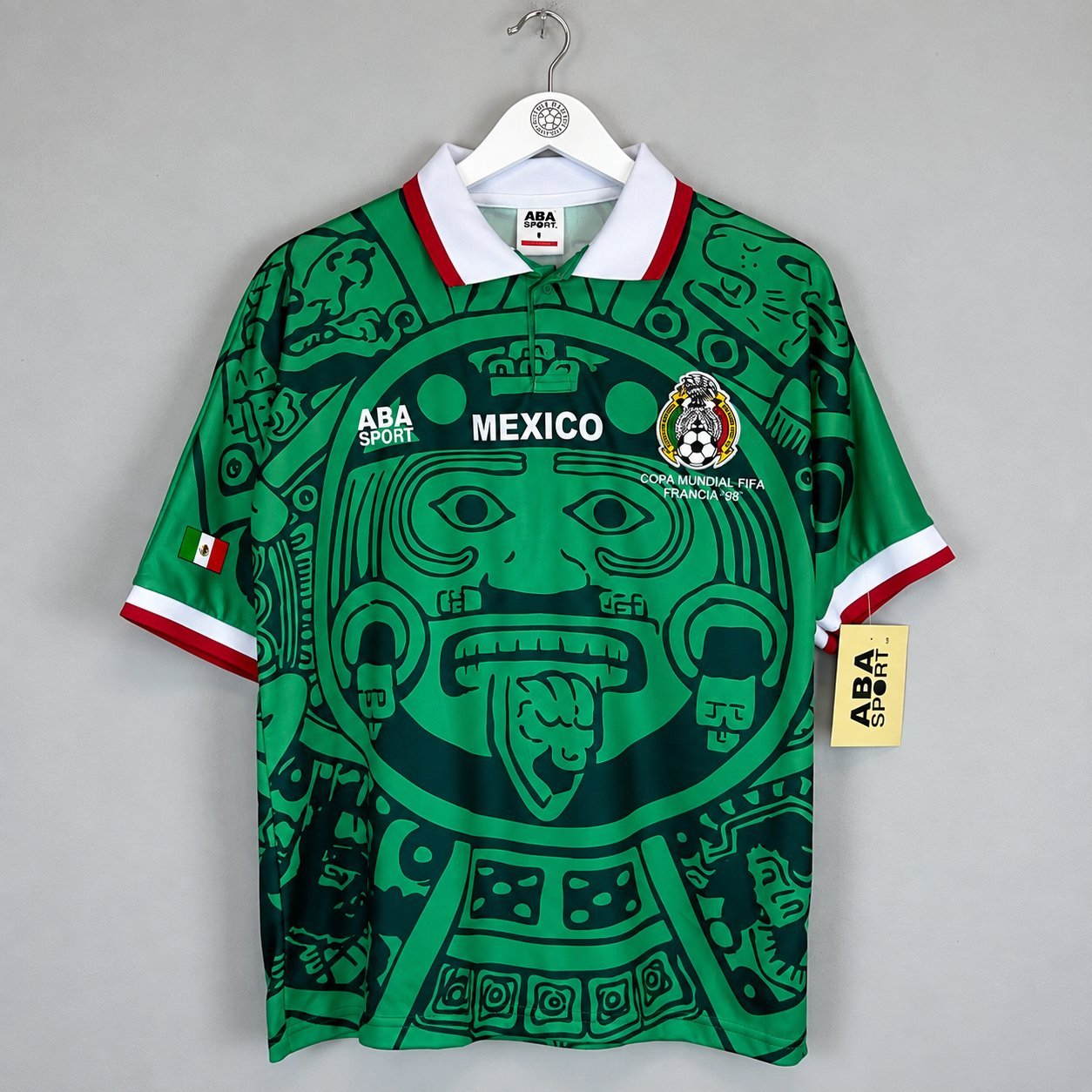
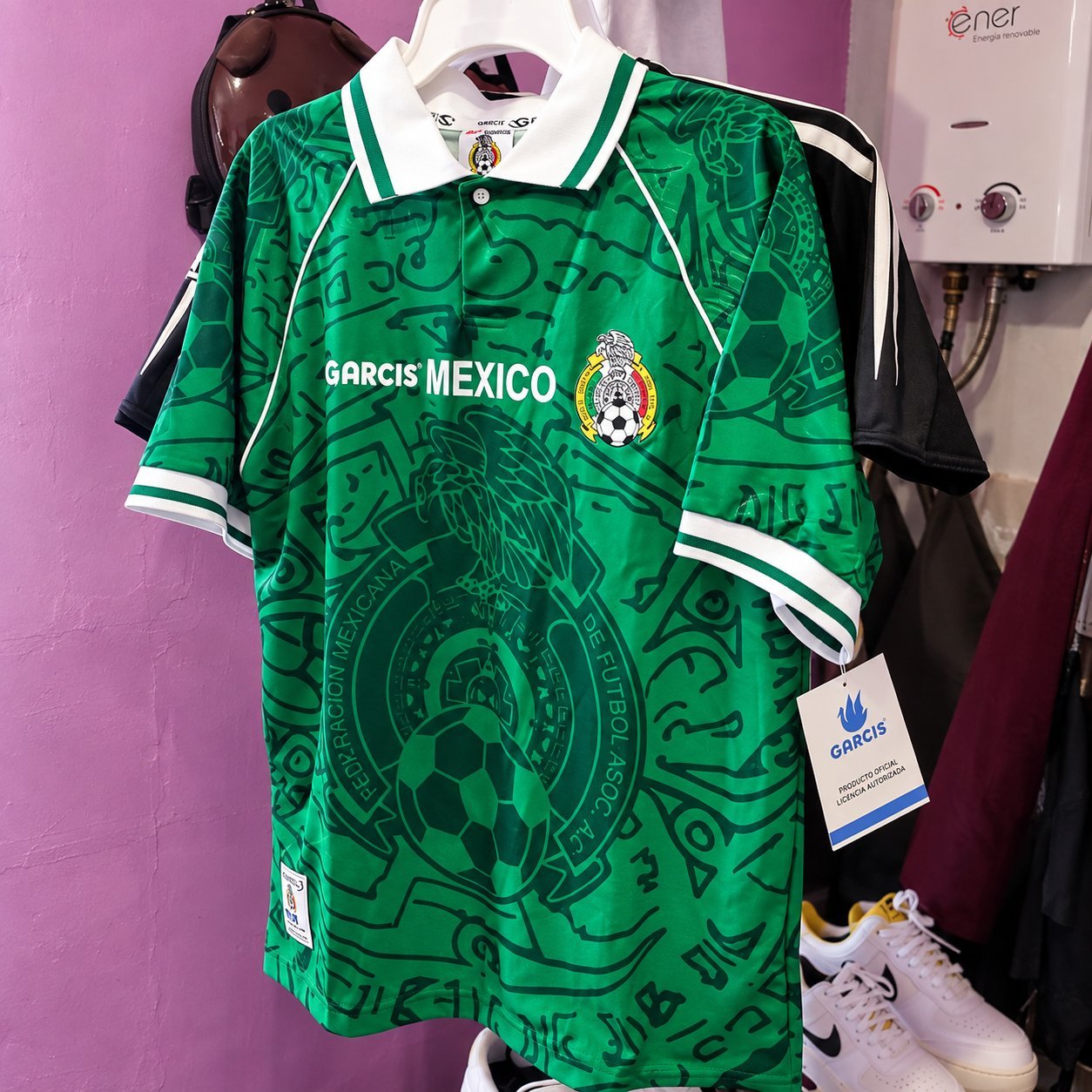
The design itself came together fast. Per that same reporting, designer Ricardo Guzmán sketched the Piedra del Sol, the Aztec calendar stone, across a letter-sized sheet in about 30 minutes after his boss, Ignacio Villarreal, told him the company had landed the national team contract. The finished jersey printed that calendar-stone pattern directly across the front in a brighter tournament-grade green, a concrete design choice that's a big part of why collectors still rank it among the most distinctive football shirts of its era.
Fame came with a cost. The design gets reproduced often enough that spotting a real one takes real attention, though no independent source ranks it as the single most counterfeited jersey in the sport, so treat that as a reputation rather than a measured fact. ABA Sport's own run with the national team ended around 1999, when the federation's kit contract moved to a different company. That successor's own design ran into a separate problem entirely: it incorporated Mexico's national coat of arms, which Mexican lawmakers ruled violated the law governing use of the national shield, flag, and anthem, forcing it off shelves within about two weeks. ABA Sport's football division wound down in the years after, even as the 1998 shirt's own reputation kept climbing.
The full timeline, from plain green to full tricolor
Mexico's earliest World Cup jerseys through 1970 stuck to a simple, unadorned green, a classic collared cut with none of the graphic treatment that came later. It photographed well and represented the country cleanly, but there was no deeper story printed into the fabric yet.
1986 changed more than the shirt. Hosting the tournament that year, Mexico paired its green jersey with red socks for the first time, completing green, white, and red on the field at once. The nickname El Tri, short for tricolor and borrowed straight from the national flag, took hold around this same stretch, though its exact origin point isn't firmly documented, and it has stuck for essentially every kit since.
1994 is often described by collectors as the jersey that brought real graphic ambition to the national team kit: an all-over geometric pattern with Aztec-inspired detailing, a boxier cut with roomier sleeves typical of the era, and enough visual depth to stand apart from the plainer shirts before it. However you read that design's influence, it arrived four years before 1998.
Then came 1998 itself, the Sun Stone shirt, still the reference point every retro Mexico kit gets measured against.
2018 leaned into the same well of imagery from a different angle, with Adidas drawing on pre-Hispanic visual themes again for that tournament's away kit, keeping the connection between Mexican heritage and jersey design alive for a new generation of fans who never saw the original 1998 shirt in stores.
2026: the pattern comes home
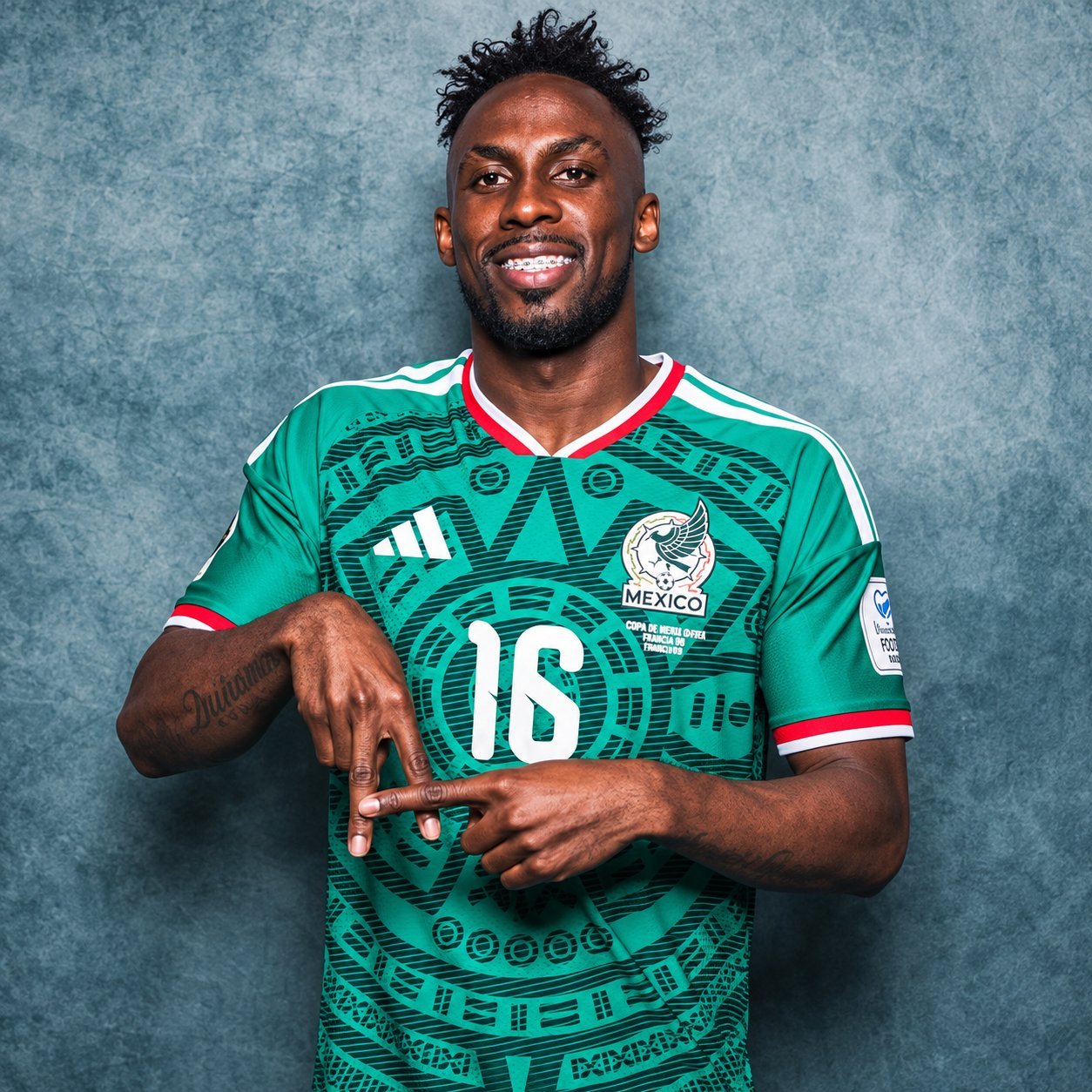
Mexico co-hosted the 2026 World Cup alongside the United States and Canada, and adidas's 2026 home kit references elements of the 1998 design rather than reproducing it outright. adidas's own release describes the jersey as carrying "SOMOS MÉXICO," meaning "We Are México," across the back neck as a nod to national pride, and coverage of the kit's reveal described a central pattern drawing on the Piedra del Sol alongside a modern holographic crest, over a green base with adidas's three stripes on the shoulders and red-and-white trim at the collar and sleeves.
Mexico wore the kit in two international friendlies ahead of the tournament, against Uruguay on November 15, 2025, and against Paraguay four days later, neither one a competitive fixture. For a country hosting the World Cup on home soil, leaning on its most beloved design rather than starting from scratch looks like a deliberate call, and it's a reasonable part of why "1998 Mexico jersey" and "mexico retro jersey" searches climbed again around the tournament.
Reissue, reproduction, or original: know which one you're buying
ABA Sport eventually reissued the 1998 shirt itself, licensed and built to the original specifications, roughly twenty-five years after the original release. Two versions exist. A fan edition carries the ABA watermark pattern across the fabric. A tournament-style player edition skips the watermark, runs in brighter tones, and adds the Mexican flag on the sleeve, closer to what the players themselves wore in France.
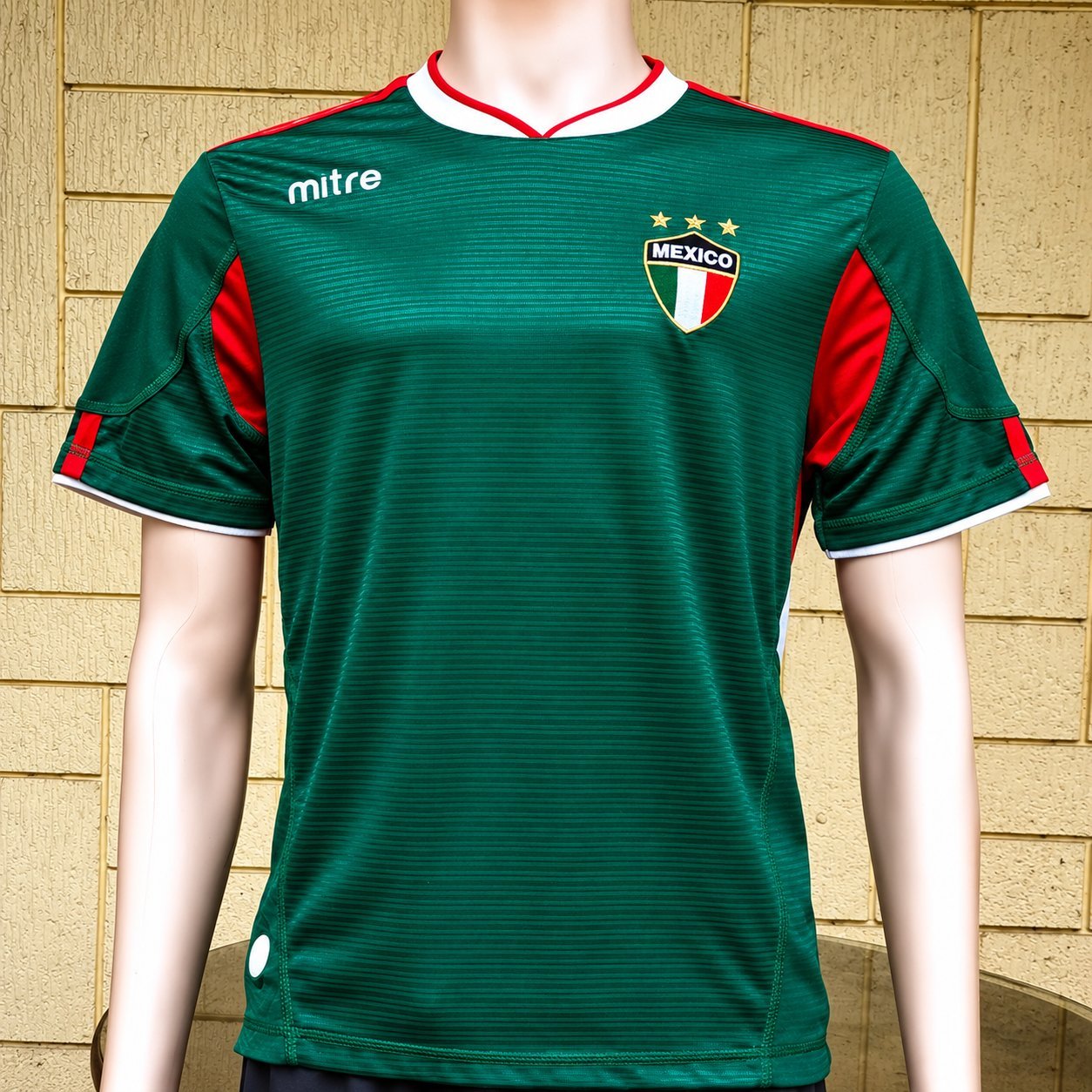
That's different from an original 1998 shirt bought and worn during the tournament itself, which is the rarest and most expensive version by a wide margin given how few genuine pieces survive in good condition. It's also different again from an unlicensed reproduction, a shirt copying the Sun Stone design without ABA Sport's involvement at all, sold openly as a budget alternative by sellers who aren't hiding what it is.
The jersey's fame is exactly why buyers need to slow down here. A shirt this frequently reproduced rewards checking the tag, the stitching, and the seller's own description before assuming "vintage Mexico jersey" in a listing title means what it implies.
What a genuine 90s-era Mexico jersey feels like in hand
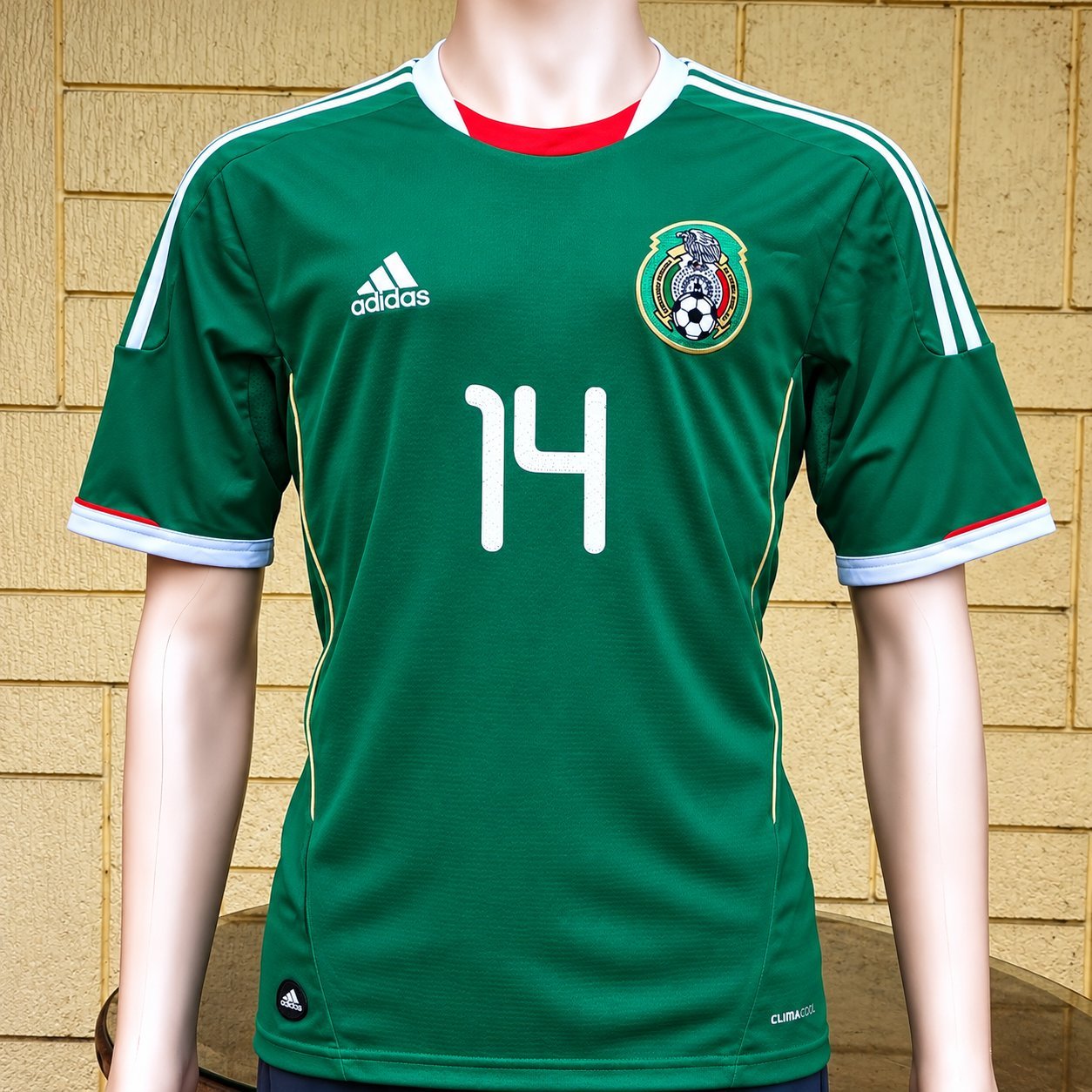
Fabric is the fastest tell once you're holding one. A real 1994 or 1998 shirt runs in heavier polyester mesh, nothing like the lighter, stretch-knit material teams wear today, and it should feel closer to a windbreaker than a modern performance top.
Fit gives you a second read. Both decades favored a boxier cut through the chest and roomier sleeves, a looser shape than the fitted jerseys Adidas builds now, so a "vintage" Mexico shirt that fits snug through the shoulders is worth a second look before you trust the listing.
Check the crest last. The Mexican Football Federation's eagle crest on a genuine period piece sits embroidered or woven into the fabric with clean, consistent stitching, not a flat printed patch with blurred edges. That single detail separates a lot of real pieces from the reproductions copying them.
The timeline at a glance
| Year | What changed |
|---|---|
| Through 1970 | Plain green jersey, classic collar, no graphic treatment |
| 1986 | Red socks paired with the green jersey for the first time, completing the tricolor look that gave rise to the "El Tri" nickname |
| 1994 | First major graphic redesign, with an all-over geometric, Aztec-influenced pattern |
| 1998 | The Piedra del Sol ("Sun Stone") design by ABA Sport, still the reference point for retro Mexico kits |
| 2018 | adidas returns to pre-Hispanic visual themes for that tournament's away kit |
| 2026 | Home kit references elements of the 1998 design, debuted in two November 2025 friendlies |
Comparing your three real options
| Option | What you're buying | Where price lands |
|---|---|---|
| Original 1998 tournament-era jersey | A genuine period piece, worn or deadstock from the actual World Cup release | Highest, and increasingly rare in strong condition |
| ABA Sport's licensed reissue | An official modern reproduction built to the 1998 specs, fan or player grade | Mid-range, priced as new officially licensed merchandise |
| Unlicensed retro-styled reproduction | A budget copy of the Sun Stone design, sold openly as a reproduction rather than an original | Lowest of the three, and should be marketed honestly as such |
Where FANKIT fits into a Mexico retro search
FANKIT's Soccer Jerseys category names retro designs directly as part of its lineup, and a site search for "retro" turned up over 400 results across different clubs and eras as of this writing. That makes a Mexico or El Tri-styled retro reproduction a reasonable thing to ask about directly, even though this guide can't confirm the exact 1998 Sun Stone design sits in FANKIT's current catalog without checking it yourself first, and catalog counts change over time.
Know the limits before you ask, too. A national team's official coat of arms is protected under Mexican law, and no custom jersey maker, FANKIT included, can reproduce a country's official emblem or another brand's trademarked crest without the rights to do so. What FANKIT can build is a retro-styled design using your own artwork or a non-trademarked version of the look, your choice of fabric, your team's neckline preference, and your own name and number added for a flat $5 personalization fee, per its published custom order process. If a specific historic Mexico kit is what you're after, reach out with the exact year and design rather than guessing from a search result, and you'll get a straight answer on whether it's something FANKIT can build within those limits.
FAQ
Who made the 1998 Mexico World Cup jersey?
ABA Sport, a Monterrey-based company co-founded by Alejandro Burillo and Jorge Lankenau, produced the shirt after winning the national team contract ahead of France 1998. Designer Ricardo Guzmán sketched the design under his boss Ignacio Villarreal, according to Mexican sports press accounts of the jersey's history.
What does the design on the 1998 Mexico jersey represent?
The Piedra del Sol, the Aztec calendar stone, printed across the chest as a tribute to Mexico's pre-Hispanic heritage.
Why is Mexico's national team called El Tri?
It's short for tricolor, referencing the green, white, and red of the national flag. The nickname took hold around the time Mexico first paired its green jersey with red socks at the 1986 World Cup, though its exact origin point isn't documented precisely.
Is there an official reissue of the 1998 Mexico jersey?
Yes. ABA Sport released a licensed reissue roughly twenty-five years after the original, available in a fan version with a watermark and a player version without one.
Does the 2026 Mexico World Cup jersey copy the 1998 design?
It references elements of it rather than copying it outright. The 2026 home kit carries a central pattern associated with the Piedra del Sol and a modern holographic crest, over the traditional green base, plus a "SOMOS MÉXICO" back-neck detail confirmed in adidas's own release.
How can I tell a real 1998 Mexico jersey from a fake?
Check the tag, stitching quality, and product details closely, since it's a frequently reproduced design with no shortage of copies in circulation. A listing priced low and available in every size is a warning sign, not a bargain.
What happened to ABA Sport after 1998?
Its run with the national team ended around 1999, when the federation's kit contract moved to a different company. That successor's own design was pulled from shelves after Mexican lawmakers ruled it violated the law restricting commercial use of the national coat of arms. ABA Sport's football division wound down in the years that followed.
Does FANKIT sell a 1998-style Mexico retro jersey?
FANKIT's retro soccer catalog covers multiple clubs and eras, and its Soccer Jerseys category lists retro designs by name, but confirm the specific Mexico design directly before ordering, since this guide can't verify every individual listing, and any build has to steer clear of Mexico's protected national emblem.
Where to go from here
If an original or ABA Sport's own licensed reissue is what you want, treat this as a collector's purchase and verify the seller, tag, and stitching before paying, especially given how often this specific design gets copied. If you're after the Sun Stone look built into your own retro-styled jersey instead, ask FANKIT directly with the year and design you have in mind, and get a real answer on what's possible before you commit.