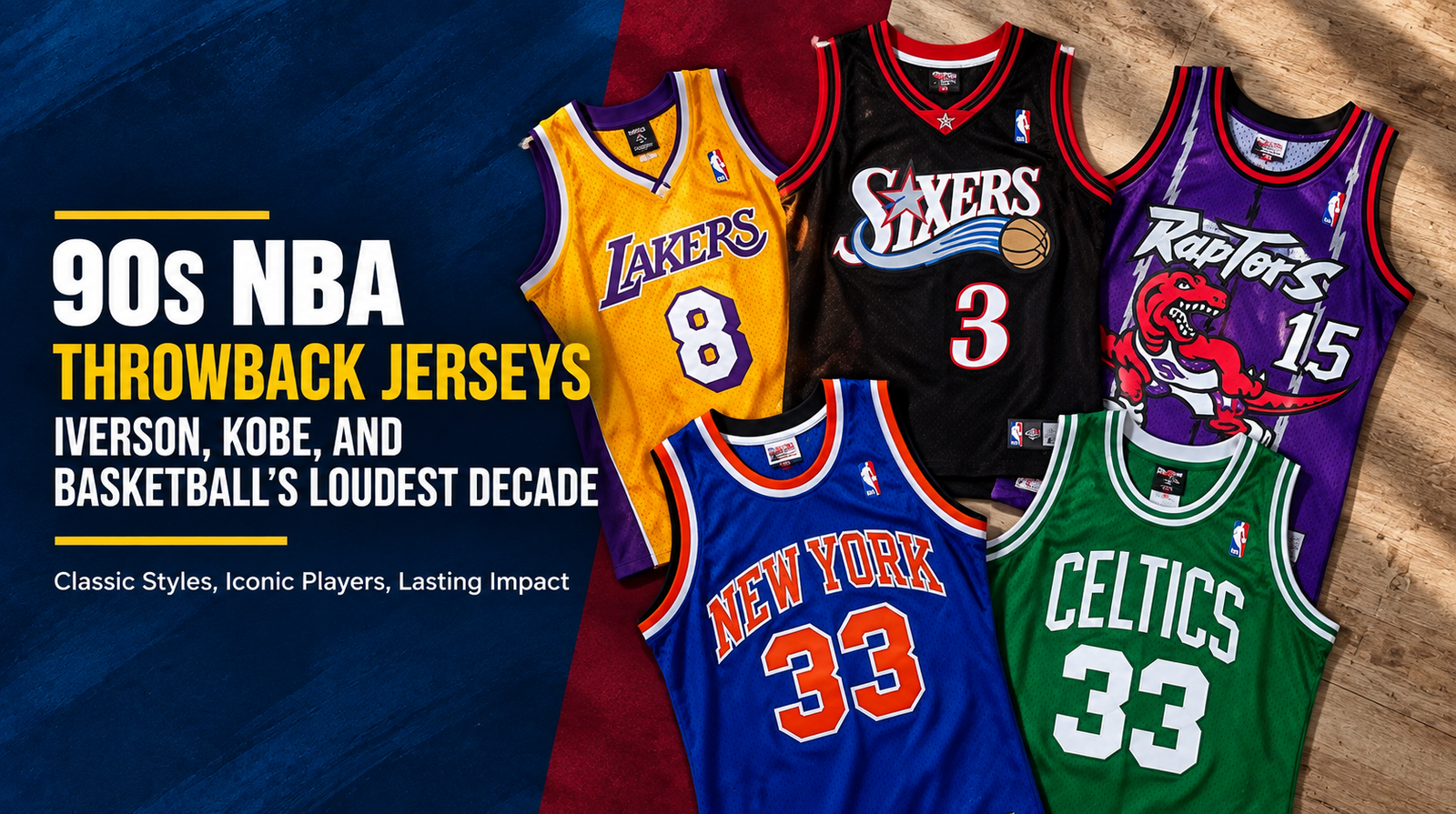
No other decade of NBA jerseys looks like the 90s. Teams went from a handful of steady, traditional color schemes to giant chest logos, mountain-range side panels, and a flaming horse on a Pistons jersey, all inside about six seasons. Then the league walked most of it back by the early 2000s, which is exactly why that stretch reads as unmistakably 90s and nothing else.
This guide covers what changed during that run, why an Allen Iverson basketball jersey still anchors the whole era for most collectors, and where you can get the look today. Three different things sit under "90s NBA throwback jerseys": a licensed reissue from Mitchell & Ness or a team's own store, an original piece from the era itself, and a custom fan-style kit built around your own team. They're not interchangeable, and this guide treats them as the separate purchases they are.
This page is independent and isn't affiliated with, endorsed by, or sponsored by the NBA, its teams, or Mitchell & Ness. Player and team names appear here for identification only.
Table of contents
- Why 90s NBA jerseys look nothing like today's
- The 76ers' star-streaked jersey and the Iverson years
- 1995 and 1996: the season the league went logo-crazy
- Kobe's number switch, and why it splits collectors into two camps
- Baggy shorts and tackle twill: the details that place a jersey in this era
- Three ways to get a 90s-style jersey today
- What to check before you call a jersey "vintage 90s"
- Custom basketball kits at FANKIT, if a licensed throwback isn't the point
- FAQ
Why 90s NBA jerseys look nothing like today's
A lot of 90s road jerseys ran heavier than what teams wear now. League-wide moisture-wicking synthetic knit didn't arrive until well into the 2000s, so double-knit mesh with a boxier cut through the shoulders was common on authentic, on-court jerseys through most of the decade, though the exact weight and feel still varied by manufacturer, team, and whether you're holding an authentic pro-cut piece or a fan-grade replica from the same season.
Authentic pro-cut jerseys from the era typically used tackle twill, sewn fabric letters with a drop-shadow outline, while replica versions sold to fans more often used a flat, printed number instead. Wordmarks often arched across the chest instead of running straight. Shorts kept growing longer through the decade too, which changed the whole silhouette from the fitted look of the 80s into something baggier and closer to what you'd recognize as "classic NBA jerseys" today.
The 76ers' star-streaked jersey and the Iverson years
Philadelphia scrapped its traditional look in 1997 for a redesign that ran a streak of stars diagonally up the side seam, red, white, and blue against a dark base. Allen Iverson, drafted first overall by the 76ers in 1996, wore this exact design through nearly his entire run with the team, which is a big part of why the star-streak jersey and Iverson are so closely tied together in how that era gets remembered.
His rookie-season crossover on Michael Jordan happened in February 1997, in this jersey, during a regular-season game still replayed constantly today. A black alternate version joined the rotation a couple of years later, giving the 76ers two distinct looks through Iverson's MVP season in 2000-01 and the Eastern Conference championship run that followed, which ended in a Finals loss to the Lakers.
That black design came back for real, and by now, it's already history rather than something still ahead on the calendar. Per the 76ers' official announcement, the team wore the black Hardwood Classic Edition uniform for 14 home "25th Anniversary Celebration" nights during the 2025-26 season, plus six additional road games against opponents the 2000-01 team had faced in that postseason, 20 games total. The uniform debuted November 8, 2025 at home against the Toronto Raptors, marking 25 years since that 2000-01 Eastern Conference championship squad, led by Iverson, Dikembe Mutombo, and coach Larry Brown, reached the NBA Finals. If "Iverson throwback jersey" searches spiked around that stretch, this is why.
1995 and 1996: the season the league went logo-crazy
A wider redesign wave hit multiple teams at once. The Atlanta Hawks, Houston Rockets, Milwaukee Bucks, and Toronto Raptors all added oversized logos across the front of the jersey for the 1995-96 season, closer to what you'd expect on a hockey sweater than a basketball uniform. Player numbers got shrunk down and tucked into a corner to make room.
Other teams took their own swing at reinvention. The Utah Jazz worked a mountain range into the side panel. The Detroit Pistons put a flaming horse on an alternate jersey. Phoenix ran a giant basketball-as-sun graphic across the chest, and even earlier in the decade, the then-New Jersey Nets tried a tie-dyed pattern that stood out from everything else in the league.
Almost none of it lasted. The Jazz, Pistons, 76ers, SuperSonics, and Warriors had all reverted to more traditional branding by the early 2000s once the giant-logo trend cooled off. One rebrand did stick around. The Washington Bullets became the Washington Wizards in 1997, a name change tied to concerns over the Bullets name, and that identity has held ever since.
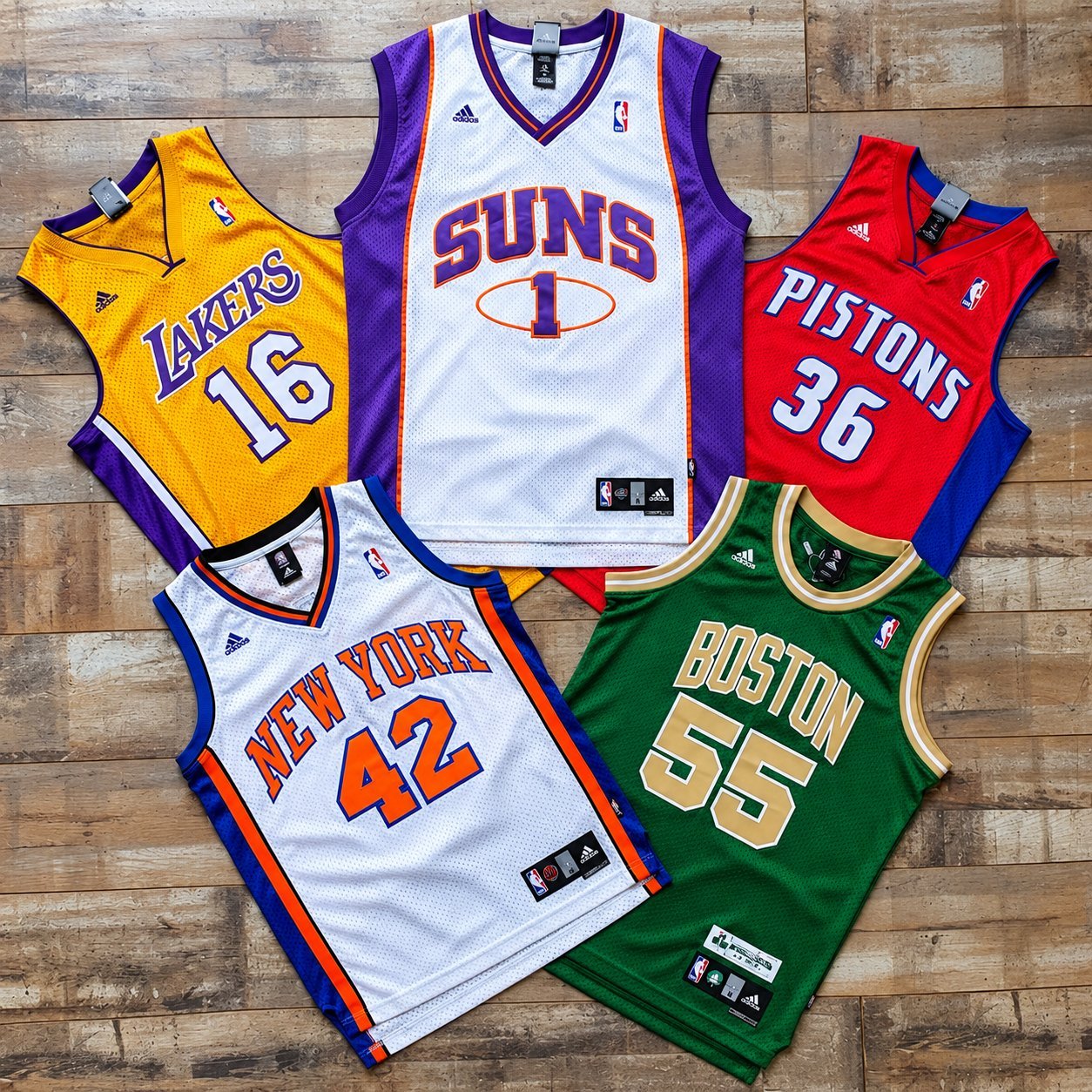

Kobe's number switch, and why it splits collectors into two camps
Kobe Bryant wore #8 from his 1996 draft year all the way through 2006, the number tied to his early Lakers seasons and the three-peat championship run from 2000 to 2002. He switched to #24 on November 3, 2006, and wore it for the rest of his career, including the 2009 and 2010 titles.
Bryant later described the switch as a kind of fresh start following Shaquille O'Neal's 2004 trade to Miami, and #24 happened to be the number he wore at Lower Merion High School before he ever reached the NBA. He's been reported saying the new number reflected growth from where he'd been, even as his game kept evolving. That's a useful marker for a collector, not a hard rule, but if you're specifically after the 90s and early-2000s Lakers era rather than Kobe's career as a whole, you're looking for a #8, since he didn't wear #24 until the 2006-07 season.
Baggy shorts and tackle twill: the details that place a jersey in this era
Michigan's Fab Five, the 1991-93 college roster that popularized longer, baggier shorts paired with black socks, pushed a look that spread into the NBA within a few seasons. It replaced the tighter, higher-cut shorts that defined the John Stockton era of the late 80s, and by the mid-to-late 90s, nearly every NBA team had followed the shift toward a longer, looser fit.
That baggier silhouette is one of the fastest ways to place a jersey in this specific window without checking a single date. Pair it with tackle twill numbers, an arched or diagonal wordmark, and a heavier mesh weight, and you're almost certainly looking at a 90s-built piece rather than anything from the current stretch-knit era.
Three ways to get a 90s-style jersey today
Scope note: pricing ranges reflect how each category is typically sold across the market, not a specific retailer's current listing. Availability for licensed player throwbacks depends heavily on which player, season, and grade you're after.
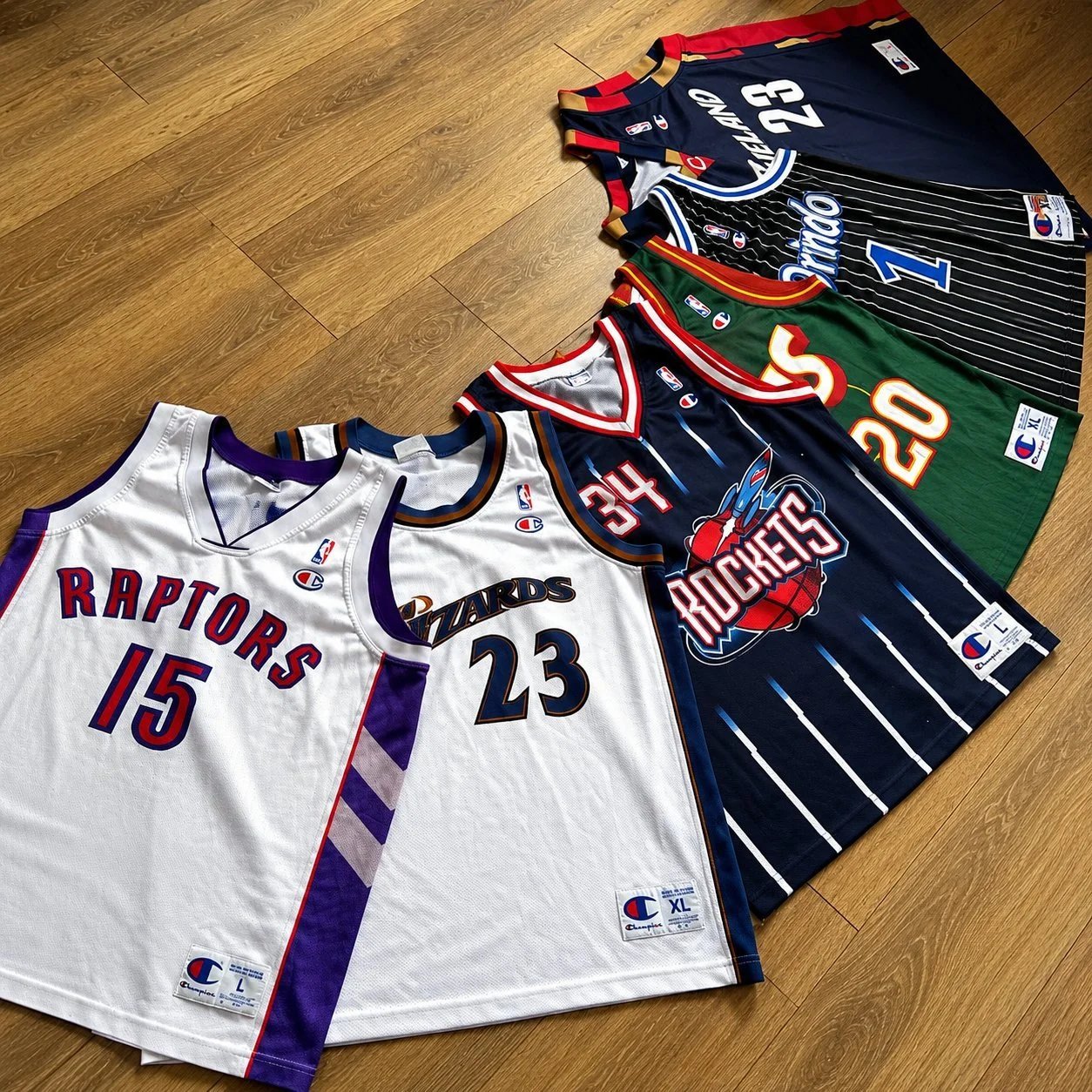
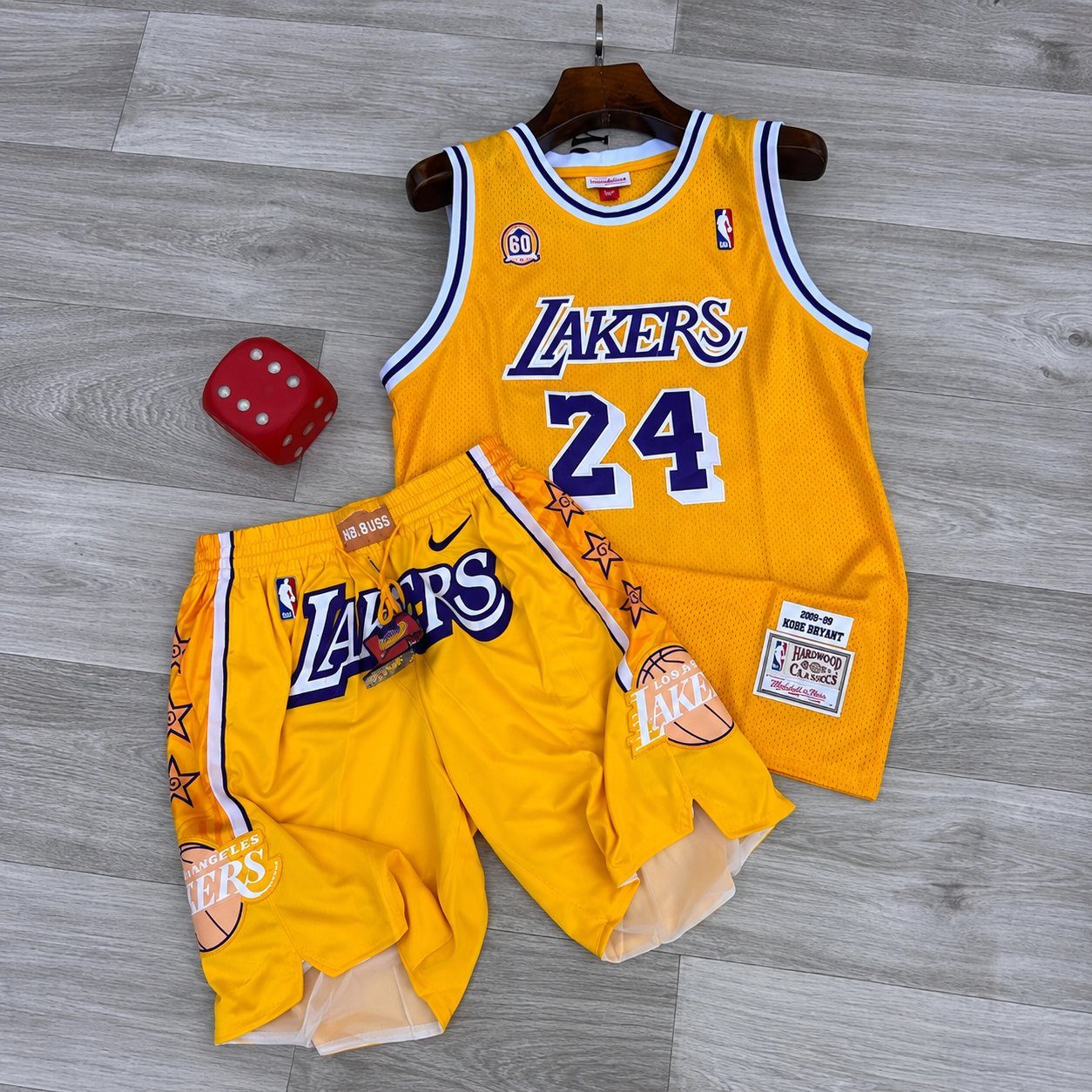
What to check before you call a jersey "vintage 90s"
Look at the tag first, but know that NBA jersey manufacturing changed hands several times within the decade itself, so one brand name doesn't cover the whole era. MacGregor Sand-Knit held the league-wide license into the 1989-90 season. Champion took over as the exclusive manufacturer from 1990-91 through 1996-97, then shared the league with Starter, Nike, and Puma on a team-by-team basis from 1997-98 onward, before Reebok phased in as the new league-wide provider between 2001 and 2005. A tag from any of these brands places a jersey in a specific window, but check which years that brand actually held the license for the team in question before assuming "90s" covers it.
Feel the numbers next. Real tackle twill has a slightly raised, stitched edge you can feel with your fingers, not a flat printed surface. A jersey claiming to be an authentic 90s pro-cut piece with smooth, screen-printed numbers instead of sewn twill is either a replica sold honestly as one, or something priced like a collectible that shouldn't be.
Weight matters too. Pick it up. A genuine 90s double-knit mesh jersey feels noticeably heavier in your hands than a current jersey in the same size, since today's moisture-wicking fabric is built lighter on purpose.
Custom basketball kits at FANKIT, if a licensed throwback isn't the point
FANKIT doesn't sell Allen Iverson or Kobe Bryant jerseys, and it shouldn't claim to. Those are licensed NBA products that belong to Mitchell & Ness, the league's official retailers, and team stores specifically.
What FANKIT's Basketball Kits category does offer is a real, separate option: sleeveless tops and shorts built in your team's own colors, with your own name and number printed on for a flat $5 personalization fee. If your rec league or beer-league team wants that boxier, color-blocked 90s look without chasing a licensed piece for every player on the roster, that's a custom order FANKIT can build, rather than a reproduction of someone else's design.
Send FANKIT your roster and design idea and you'll get pricing and a project-specific estimate back, not a guess. Keep in mind that the 3 to 5 business days listed in FANKIT's shipping policy covers processing time before your order ships, not the delivery time that follows, so confirm total turnaround directly if you're working against a season start date.
FAQ
What year did the 76ers introduce the star-streak jersey Iverson wore?
The redesign debuted in 1997, the same era Allen Iverson entered the league, and he wore it through nearly his entire run with the team.
Why did Kobe Bryant switch from #8 to #24?
He's been reported describing it as a fresh start after the 2004 trade that sent Shaquille O'Neal to Miami. #24 was the number he'd worn in high school before the NBA, and he began wearing it in the 2006-07 season.
What NBA teams got giant logo redesigns in the mid-90s?
The Atlanta Hawks, Houston Rockets, Milwaukee Bucks, and Toronto Raptors all added oversized front-chest logos for the 1995-96 season, a trend that mostly disappeared again within a few years.
Is a Champion or Starter tag a sign a jersey is genuinely from the 90s?
It can be, but check the specific years. Champion held the exclusive NBA license from 1990-91 through 1996-97, then shared manufacturing duties with Starter, Nike, and Puma team-by-team from 1997-98 through the start of the 2000s, so the tag narrows the window rather than confirming "90s" on its own.
Did the 76ers bring back the Iverson-era jersey?
Yes. Per the team's official announcement, the 76ers wore the black Hardwood Classic Edition uniform for 14 home celebration nights plus six additional road games, 20 games total, during the 2025-26 season, starting November 8, 2025, to mark 25 years since the 2000-01 Eastern Conference championship team reached the NBA Finals.
What's the difference between tackle twill and printed numbers on a jersey?
Tackle twill numbers are sewn fabric pieces with a slightly raised edge, used on authentic pro-cut jerseys. Printed numbers sit flat on the fabric and are typically used on lower-cost replica jerseys.
Why do 90s NBA shorts look so much baggier than earlier decades?
Michigan's Fab Five popularized a longer, looser short in the early 90s, and NBA teams followed that shift within a few seasons, replacing the tighter cut common through the 80s.
Does FANKIT sell officially licensed NBA player jerseys?
No. FANKIT builds custom fan-style basketball kits in your own team colors with personalized names and numbers. Licensed player jerseys are a separate product from official retailers and Mitchell & Ness.
Which Kobe Bryant jersey number matches the 90s and early-2000s Lakers era?
Number 8. He wore it from his 1996 draft year through 2006, covering the three-peat championship run from 2000 to 2002, before switching to 24.
Where to go from here
If a licensed Allen Iverson or Kobe Bryant jersey is what you're after, Mitchell & Ness Hardwood Classics and official team stores are the right starting point, and knowing the brand tag, twill numbers, and fabric weight above will help you judge what you're buying. If your own team wants that 90s color-blocked look with your own names and numbers instead, FANKIT's basketball kits are built for exactly that, and a quick message with your roster gets you a real quote back.