

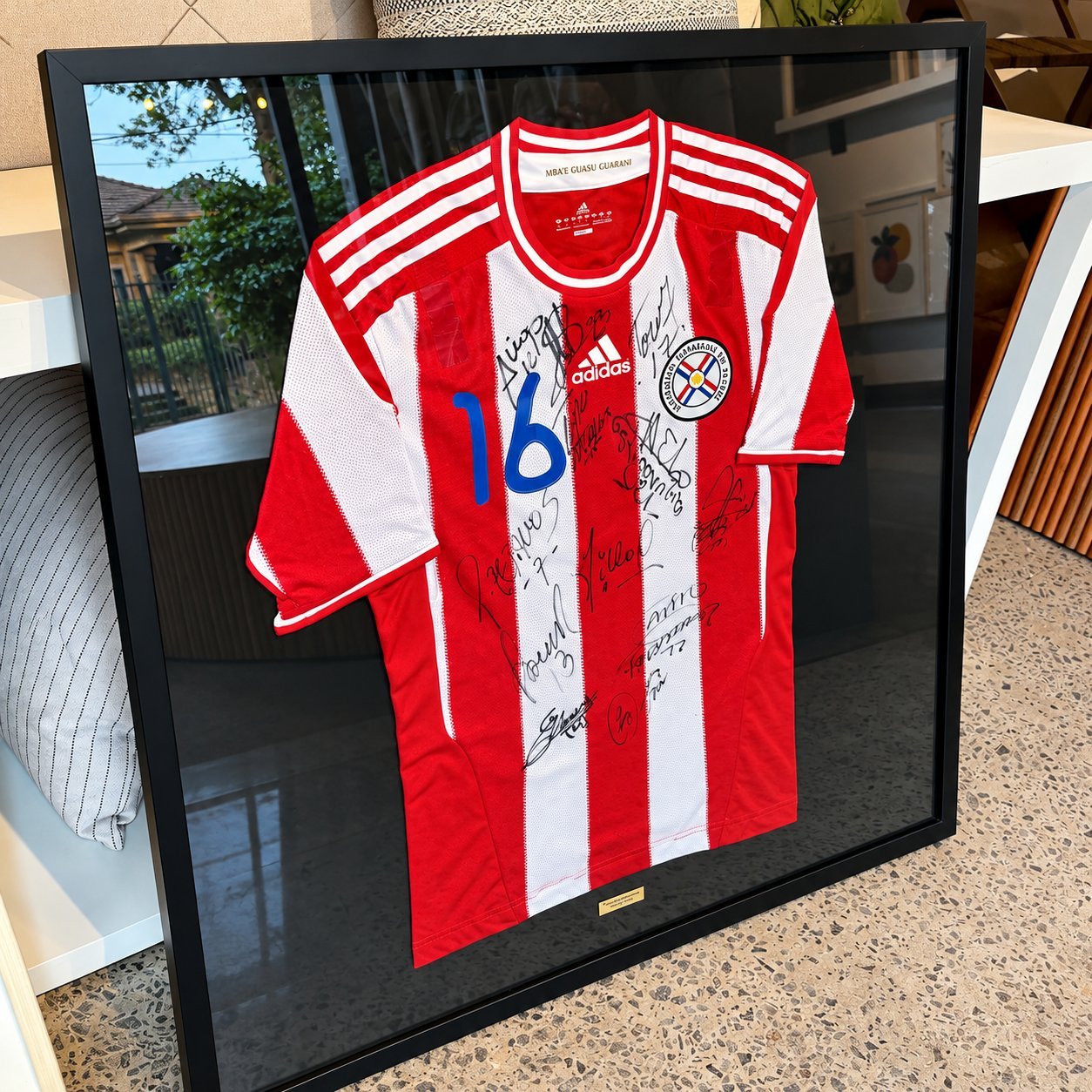
You need a shadow box deep enough to keep the jersey off the glass, acid-free backing, stainless steel pins or archival thread to hold it in place, and UV-protective glazing to stop the colors from fading. Skip glue, staples, and regular tape entirely. Anything that touches the fabric with adhesive is the single most common way people damage a jersey they meant to preserve.
This guide walks through the full process, the right frame size for your sport, and when a DIY job makes sense versus handing it to a professional.
In this guide
What you need before you start
A shadow box frame, not a standard flat picture frame, since a jersey needs real depth to sit without pressing against the glass. Look for at least 1.5 inches of depth for an adult jersey, and closer to 2 inches for a heavier one like a wool baseball jersey or a padded hockey cut.
Acid-free foam core or matboard for the backing. Regular cardboard backing yellows and breaks down over years, and that breakdown transfers onto the fabric sitting against it.
Stainless steel pins, specifically, not whatever pins happen to be in your sewing kit. Regular steel pins rust over time, and that rust stains fabric permanently. Archival thread works too, and holds more securely for a jersey you plan to keep mounted for years rather than swap out.
UV-protective glass or UV-protective acrylic for the glazing. Glass blocks UV more consistently and resists scratching better, but it’s heavier and more fragile to handle. Acrylic is lighter and shatter-resistant, which matters if the frame is going somewhere kids or pets can reach it, though it scratches more easily over time.


Preparing the jersey before it goes in the frame
Wash it first if it needs it, and let it air dry completely. A damp jersey sealed behind glass is exactly how mildew gets started inside a frame nobody opens again for years.
Iron it on the lowest heat setting your fabric allows, with a thin cotton cloth between the iron and the jersey. Never run the iron directly over a printed number, a heat-pressed logo, or a signature. Direct heat on any of those can soften or warp the exact details you’re trying to preserve.
Decide how you want it folded before you touch a single pin. The usual approach is folding the sleeves in behind the body so the front, the name, and the number all stay fully visible. Whatever you choose, keep the main design elements showing. A framed jersey that hides the number defeats the entire point of framing it.
Mounting it without damaging the fabric
Pinning is the easiest method and works well for most jerseys. Push stainless steel pins through sturdy sections only, the shoulder seams, the torso, and the hem, angling each pin into the backing board rather than straight through. Use enough pins to hold the shape flat without turning the back into a pincushion.
Stitching holds more securely and suits a jersey you’re mounting permanently. Use a single strand of archival thread that roughly matches the jersey’s color, and make small, discreet stitches through the fabric and board at the same structural points you’d pin: the shoulders, the torso, and the hem. Keep the thread on the back side, out of view from the front.
A third method, used by professional framers for display pieces, fits the jersey around a shaped foam core that attaches to the backing rather than to the jersey itself. The foam gives the jersey some dimension and body instead of lying completely flat, which is part of why professionally framed jerseys often look fuller than a DIY version pinned straight onto a flat board.
Whichever method you pick, keep glue, staples, and adhesive tape away from the fabric entirely. All three cause permanent damage, and none of them are necessary once you’ve pinned or stitched the jersey into place.


Frame size by sport
Jersey sizes vary enough by sport that a frame built for one won’t necessarily fit another, especially once you’re dealing with bulkier cuts like hockey or oversized throwback styles.
| Sport | Typical adult frame | Youth / smaller sizes |
|---|---|---|
| Football | 32×40, 3-inch mat border | 28×34 |
| Basketball | 28×34 or 32×40 | 24×30 or 28×34 |
| Hockey | 32×40, or 34×42 for size 58 and goalie cuts | 28×34 |
| Baseball | 28×34 or 32×40 | 24×30 |
| Soccer | 28×34, 2.5-inch mat border | 24×30 |
Scope note: these are common fits reported by framing retailers, not fixed rules. A relaxed or oversized cut in any sport may need a size up from what’s listed here, so measure the actual jersey laid flat before ordering a frame.
Measure your specific jersey laid flat, shoulder to shoulder and collar to hem, then add enough border for the mat and depth you want. A jersey that’s close to the frame’s edge looks cramped once it’s mounted, so sizing up slightly almost always looks better than sizing down.
When to hire a professional instead
If the jersey is signed, game-worn, or holds real value to you beyond sentiment, a specialist jersey framer is worth the extra cost over doing it yourself. Ask how they fold it, whether patches and sleeve logos stay visible, and whether they use acid-free archival materials throughout, not just behind the glass.
A general art framer or craft store isn’t automatically the right call here either. Jersey framing is its own specialty, closer to textile conservation than picture framing, and plenty of framers who do beautiful work with photos and art have never handled a jersey before.
For a jersey you bought to wear or a custom piece you had made for the display itself, doing it yourself is a completely reasonable choice. The stakes are lower, and the process above covers everything a specialist would do differently anyway.
Keeping a framed jersey looking good for years
Where you hang it matters more than most people expect going in. Keep it away from direct sunlight, which fades printed and sublimated colors steadily even through UV-protective glazing, and away from bathrooms, kitchens, or anywhere near a heating vent, since both humidity and temperature swings work against the fabric over time.
Dust the glass or acrylic with a soft microfiber cloth rather than a paper towel or anything abrasive, and use a cleaner rated for the specific glazing you have. Standard glass cleaner can cloud or scratch acrylic over repeated cleanings, so check which type you’re working with before you spray anything.
Check the mounting once a year or so if the frame hangs somewhere it gets bumped or jostled, a hallway or a kid’s room, for instance. Pins can shift slightly over time even when they’re set correctly, and catching that early is easier than re-mounting a jersey that’s slipped out of position for months.

Where FANKIT fits into this
Most framing guides assume you’re starting with a jersey you already own. If you’re framing something to commemorate an event instead, a birth, an anniversary, a retirement, or a tribute to a team that doesn’t make official gear anymore, FANKIT’s custom order process lets you build that jersey from scratch rather than search for one that happens to fit the occasion.
You choose the sport, the fabric, the neckline, and the printing method, right down to the name and number on the back, which means the display piece you’re framing can say exactly what you want it to rather than whatever a retail catalog happens to offer.
Reach out to FANKIT if you’re planning a custom jersey specifically for display rather than wear. Mentioning that upfront helps with choices like fabric weight and printing method, since a jersey that’s going behind glass doesn’t need to survive the same wear and tear as one going onto a field.
FAQ
What size frame do I need for a jersey?
Most adult jerseys fit a 28×34 or 32×40 frame depending on the sport and cut, with hockey and oversized styles sometimes needing a 34×42. Measure your specific jersey laid flat before ordering, since cuts vary even within the same labeled size.
Can I frame a jersey myself, or do I need a professional?
A standard jersey you bought to wear or had custom made works fine as a DIY project. Signed, game-worn, or especially valuable jerseys are worth sending to a specialist framer experienced with textiles specifically.
What kind of glass should I use to frame a jersey?
UV-protective glass or UV-protective acrylic, either one, as long as it blocks close to 99% of UV rays. Standard glass without UV protection lets colors fade noticeably within a few years of display.
How do I keep the jersey from touching the glass?
Use a shadow box frame with enough depth, at least 1.5 inches for most adult jerseys and up to 2 inches for heavier ones. A jersey pressed against the glass traps moisture, and that’s a common cause of mold inside a sealed frame.
Should I iron a jersey before framing it?
Yes, on the lowest heat setting with a cloth between the iron and the fabric. Avoid ironing directly over printed numbers, heat-pressed logos, or signatures, since direct heat can soften or distort them.
Is glue or tape ever okay for mounting a jersey?
No. Adhesives cause lasting damage to jersey fabric. Stainless steel pins or archival thread hold a jersey securely without that risk.
Where to go from here
Measure the actual jersey, choose a shadow box deep enough to clear the glass, and mount it with pins or thread rather than anything adhesive. If the jersey you’re planning to frame doesn’t exist yet, a custom order through FANKIT above builds it to the exact design and size you have in mind.
Framing a jersey that doesn’t exist yet?
If the display piece you have in mind isn’t something you can pull off a shelf, FANKIT builds custom jerseys to the exact sport, fabric, name, and number you want on the wall, so the framed piece commemorates the moment rather than working around whatever a retailer happens to have in stock.